Wednesday, March 9, 2016

A little extra and the Bishop's wife

I pay a little extra to the cable company to have a cable box with DVR, digital video recording.

I could write more than a few posts deriving from that one sentence. The cable company's rate structure and business model makes me think of modern day pirates. The quality of digital recording is excellent, and it records in high definition if one has that service - I pay a little extra for that, too. Why I should have to pony up more money for high def in a world in which high def became the broadcast standard some years ago has not been explained. Did I use the word 'pirates' yet? There is a problem, of course. (Isn't there always?) The box fills up with recordings, at which point programs and movies have to be deleted to make way for new items of interest.

I record a lot of movies, mostly from the classic movie channel. You know, the one that I was fortunate to get when it was part of a special deal? Otherwise, I'd have had to pay a lot extra for an entire service level of sports channels which I would never watch in order to get the one non-sports channel in that package, i.e. the classic movies channel. Did I use the word 'pirates' yet?

Well, anyway, since I gave myself that relatively inexpensive video projector for Christmas, I've been watching a couple of movies just about every week. The way I currently have things set up, the old Hollywood style projected picture is about 5 feet wide, and a little under 4 feet in height. Widescreen, well at least the tv version of it, is over 6 feet in length. In my small-ish space, I could reorient things and get a much larger picture, but my current method allows for a guest or two without totally rearranging the furniture.

Last night, I finally caught up with "The Bishop's Wife". For some reason or other, I'd never seen it. It's another of those movies with a somewhat messy history. Produced by Samuel Goldwyn using facilities at MGM, it was distributed by RKO, and somehow ended up looking like it might have been filmed at Paramount. The story told of a somewhat fastidious Bishop who had become so focused on the task of raising money for a cathedral that he was ignoring his wife and daughter, as well as the needs of parishioners. Heavenly intervention arrives in the form of a rather rakish angel. Goldwyn became so dissatisfied with the dailies he called a halt to production, replaced the director, had changes made to the sets as well as the script, and changed one important bit of the casting. The role of the Bishop was played by Cary Grant, the Angel was played by David Niven. During the hiatus, the director and Goldwyn decided that the roles should be reversed. Grant was allegedly not very happy with this turn of events. The story has changed over the years, however, so that now it is said that the change in roles was Grant's idea and it was Niven who was unhappy. (Niven was at a low point during the filming. His wife was injured in a fall and died from ensuing complications leaving him with two young sons to raise.) However the change happened, both men gave excellent performances in their new roles. Loretta Young does a decent job as the Bishop's wife, suffering neglect with admirable restraint, but was not quite as inspired in her performance as her co-stars.


One of the stories from the set told of a day the director had trouble with both Mr. Grant and Ms. Young. They each insisted that for one particular scene, they be photographed from their "good side". The only problem was that they both favored the same side. The director filmed the scene with the two stars standing side by side looking out a window. Mr. Goldwyn was not happy. The next day he confronted the director and the stars on the set. After having the situation explained to him, he is said to have remarked that if he was only going to get a shot with a half of the stars faces, then they would only get half of their salaries. There were no further such demands.

The rest of the cast was rounded out with instantly recognizable character actors. Well, instantly recognizable for anyone of my age, or for inveterate moviegoers. I especially liked Monty Woolley in the role of a history professor, and Gladys Cooper as the rich widow funding the cathedral. Elsa Lancaster had been cast in a maid's role, but had to withdraw due to other commitments. During the production delay, she finished up her other role and ended up replacing her replacement who had to exit due to commitments of her own. Two of the young players in the previous year's holiday picture, "It's a Wonderful Like" are in the cast - the fellow who played the young George Bailey, and the young lady who played ZuZu of the petals.

Although the film got glowing reviews, it didn't do a lot of business at the box office. Under the theory that the title made people think it was a religious story, the advertising was changed (and in some markets the name of the picture as well) to read "Cary and the Bishop's Wife!" In those markets, the box-office increased 25%.


It's easy to see why it became a Holiday classic back in the days when movies were regularly shown on broadcast tv. A charming sort of romantic comedy, there's Christmas shopping, snow scenes, and a tad of religion. In once scene, Cary Grant plays a harp in the home of the rich widow. The melody became popular, acquired a set of lyrics, and became a minor hit for Nat King Cole as "Lost April".


Most of the movies currently on my DVR are old favorites which I haven't seen in many years. I'm running out of movies I've recorded that I haven't seen. Soon I'll be watching a number of old favorites which I haven't seen in a long, long time. I'm still surprised I spent the money for the projector (it cost about the same as my 16mm print of Casablanca, purchased in 1975 or so). All the little extras I've spent which used to make me feel slightly guilty over the expense incurred have made this possible; it has turned out to be more rewarding than I ever imagined.


Tuesday, March 8, 2016

Such impermanence.

Okay, here's the thing.

I'm really tired of torturing the language to find ways not to start a post with "I". Such an opening seems far too egotistical. In the long run, however, this blog is about - well, me. My attitudes, my thoughts, my activities, my diatribes against the slings and arrows, my fears (if I want to go that far), and so on and so forth. That's a lot more 'me' than I sometimes find comfortable expressing, or for that matter, reading. In the long run, I suppose this is kind of like scribbling on a fence or a bathroom wall somewhere. I don't really kid myself that I'm all that interesting, or that my thoughts are all that different and are therefore deserving of notice. My writing style isn't especially interesting either. Sometimes I kid myself that distant friends, internet friends, far off family, can occasionally check in and see what is happening in the life and times. Maybe a nephew or niece will one day decide to find out whatever happened to that crazy uncle who, rumor has it, all but ran away to join the circus. It would be nice if they found these ramblings and read just enough to catch the memories, dreams, ideals, and contradictions that make up the old psyche.

I verbally ramble. I am not comfortable with the quick spittle expressions of not quite face to facebook, or tweeting twitterers. My thoughts and words meander. I often feel helplessly old fashioned in this regard. I've no burning desire to be as verbose as Charles Dickens who, after all, was paid by the word. Then again, reading Dickens is a joy in my universe. (I'd have said "in my book" but the books in question were his.) (Ba-da-dumb.)

This morning, I wondered (not for the first time) why I hadn't seen any posts from Delores' blog in about a month. I subscribed to her 'Under the Porch Light', so her posts arrived by email. She had trouble some time back with her electronic interface device, and I had assumed that she was either taking a break, or that such trouble had returned. She was often the only person to leave notes on this page of the electronic universe. I steered my browser to her blog. It is gone, vanished into the sub electronic ether, the online evidence of her being has been removed. There may be any number of very good reasons for this turn of events. Perhaps there was too much information which was used by someone stealing her identity. A hundred quick explanations form in the thought process.

The blogs, facebook accounts, and etc. of people I know or hardly know or would like to know have vanished before. I find it unsettling. These twistings of the ones and zeroes are part of the evidence that we were here, they are expressions of our humanity, a record of our species, the modern equivalent of graffiti etched onto the walls of ancient Egypt. It is unsettling to realize how quickly it all can vanish.

                                              ------------------------------------------------------

Today, March 8th, is International Women's Day. I think I've noted it in previous posts. For the last couple of years, I've done my annual radio show about the "all girl" big bands on the weekend closest to this date. This year, I had other plans, as it's the 16th anniversary of my program; I've been giving serious thought to calling it a day and closing down the show. I've thought about doing it a couple of times over the last year or so. The anniversary seems like an appropriate time. Last Saturday's show was going to be a kind of tale in the telling, a history of how the show developed and why I think it might be time to stop. This coming Saturday would be the actual anniversary, the slam bang fabulous finish. Now, my show is on for two hours starting at 6pm on Saturday nights. It's a time when people are making or eating dinner, getting ready to go out, deciding what to watch that night, etc. I've always thought it more of a music show and less talk about the music or the whys and wherefores. So deciding to proceed in such fashion was an exception to the way I've conducted my program. Of course, the guy on at 2 o'clock that afternoon suddenly decided to do a show in which he autobiographically told the story of how he found the music that became important to him, and what meaning it had in his growing into allegedly responsible adulthood. It was a great show. I couldn't follow that act. I'd intended to play a song or two for International Women's Day, but with the last minute change in plans ended up playing about an hour's worth. The remaining hour was more or less just doodling around, not unlike the way the show started out. I still haven't made the decision about the future of the show, I've wavered back and forth. I guess in a way it's my scratchings on the wall.

As always, I hope any listeners enjoy the show.


Monday, March 7, 2016

Paying for the Fiddler

This morning, as I was perusing the New York Times online, I stumbled upon a mention of the current Broadway revival of the musical "Fiddler on the Roof". The mention was in the headline of an article about the lifestyle of one of the show's performers. As I checked to see if I was interested in the article, I noticed a link to the show's review, from which I surmised that the revival started its run a few months ago. That review contained a link to the original production's review from 1964, which I also read.

from the 1964 review
 
I must mention that I subscribe to the New York Times online. Personally, I still I prefer the old fashioned experience of holding a newspaper, folding and turning the pages (and the sound that made), and getting my fingers smudged with rubbed off ink. I liked seeing the ads for products in which I had no interest; graphic concoctions of art and commerce that helped pay the paper's operating expenses. I liked seeing articles that piqued my curiosity, I liked reading opinions that differed from my own. I do not wish to be party to the slow and painful death of newspapers and objective reporting, but the fact of the matter is that the Times is unaffordable for me to purchase on a daily basis. My online fee, acquired during a special promotion, runs $15.00 a month and includes the paper's historical files. I would not be able to afford one month of the paper's Sunday edition for that price. These promotional deals are often set for a number of months, and bear constant watching, as the monthly fee is deducted automatically from my bank account. When the deal expires, one will find one's account charged at a much higher rate without warning. A month isn't really a month - the date on which my subscription fee is deducted from my bank account is a moving target, forever edging forward. At the beginning of this past autumn, the deduction was made during the third week of the month. It is now made within the first few days of the month. This maneuver, of course, is not unique to the Times. My cable/phone/internet bill does the same thing. As that one is a much larger amount, I can't let it be set to automatically deduct lest I be caught short. But the date for that bill still changes, a month is not a month, and the 'due by' date seems to move forward as well. But I digress. 

When I lived in New York City, or within a hour or two of it, I greatly enjoyed going to shows. Reading the original review of 'Fiddler', I started to wonder how much it cost back in 1964 when it debuted. As the review was in a .pdf scan of the paper, I went to the next page to check the theatre listings for the price. In 1964, an orchestra seat for that brand new musical cost $9.40 on a Friday or Saturday night when prices were highest.

As cost is relative, I looked up the minimum wage in 1964. The Federally set minimum in those days was $1.25 an hour. Which means, that forgetting taxes, deductions, and etc. someone earning the minimum wage would have to work for 8 hours to afford one ticket.

The top price for an orchestra seat for the current revival, which is far less than the price of a new show, is $167.00 for a Friday or Saturday night. Someone working at the Federal minimum wage of $7.25 an hour would have to work over 23 hours to afford one ticket.

The Broadway Theatre, one of the few theatres whose entrance is actually on Broadway. It was built as a movie palace with a stage. Mickey Mouse made his debut here before it switched to live shows. It returned to movies for the premiere of Disney's 'Fantasia', and once again for the premiere of Cinerama. When I was seeing shows there, the exterior looked quite different. (The first show I saw there was 'Cabaret', back in 1968.) The current façade and marquee are from work done when the neighboring skyscraper was built a few years ago.


My curiosity got the better of me, and I looked to see how much an average orchestra seat for the current hot ticket, the hip-hop infused musical 'Hamilton' would cost. Finding ticket prices is somewhat difficult if one isn't ordering, and for 'Hamilton', tickets are hard to get. I found someone who complained in a letter written last June that the mid-orchestra seats they had just acquired for that November cost $327.00 each. I decided to check the show's website, which claimed that a few seats were indeed available. The cost for next Friday night was well over $1,000.00. I think it was close to $1,200 something, but my eyes and mind boggled. I had to look away.


Friday, March 4, 2016

Another dance on the edge

Last night, after another very long week (well, actually two very long weeks), I finally started work on the first part of a program to celebrate the 16th anniversary of my radio show. It was my intention to only work for an hour and then watch the Republican's performance piece. I got lost in my task and missed the debate. I just saw the first 15 minutes of it on the internet. I had great difficulty with the Fox News website (Fox News hosted the event), having to restart the debate webstream 3 times, watching a different commercial each time. I finally got the first section to play without crashing. Then it suddenly ended, and according to the website, the stream moved on to section 2 of the debate. The only problem was that it was section one repeated. These problems occurred at 7 something o'clock in the morning, on a major corporation's website, i.e. not a heavy traffic time. If ever there was a metaphor hanging the air like a bunch of over ripe grapes....

In the few minutes I got to see, candidate Marco Rubio played the role of attack dog. The general demeanor of the proceedings degraded so quickly that within the first five minutes the leading candidate was defending the size of his genitals. I suppose it was something of a victory that he didn't use crude language. The audience hooted and hollered with delight, similar to what one might hear from a group of children egging on the participants in a school yard brawl. Perhaps it didn't help matters that a couple of nights ago I watched a 1942 movie called "Hitler's Children". It was a wonderfully melodramatic and lurid account of life under the growing influence and strength of the Nazi regime. It opens with a schoolyard fight between freedom loving American children and heavily indoctrinated Fuehrer loving German children. It was based on a once famous book, "Education for Death", which was also the source material for a Disney short of the same name.

Here's a clip from the movie's opening (all that is available on the internet - there is a trailer on the Turner Classic Movies website, but its embed code doesn't work) just ignore the subtitles, please... (and yes, that's young Bonita Granville, who played Nancy Drew, wielding the baseball bat).


The Disney version (if you get the bothersome 'world's best' flag on the lower left hand corner, it can be clicked off. Oh, by the way, if you're going to watch this, I suggest using the full screen function.)


I had to remind myself that the alleged debate was a forum of candidates seeking to be the leader of the most powerful nation on the face of the Earth. Of course, it probably doesn't matter anymore - our Presidency is beginning to resemble a ceremonial leadership position not unlike the monarchs of Great Britain. The real authority and power lies elsewhere. Pun intended. Considering the consequences of electing any of the candidates in last night's entertainment (and the moneymen behind the curtain), I have begun to consider that Armageddon might not be that bad of an idea after all.

Last week's radio show escape didn't focus on a particular month and year. It was one of the jukebox style shows I've been doing lately, and took note of a number of birthdays. Thus, there are performances from singer Mildred Bailey (2/27), bandleader Jimmy Dorsey (2/29), singer Dinah Shore (2/29), bandleader Glenn Miller (3/1), and composer Kurt Weil (3/2). Sadly, I only fit in one piece (at the opening) for Desi Arnaz (3/2). And there was one song with a lyric by Dr. Suess (3/2). My 'senior moments' continued - a reference I made to a Lucha Libre mask came out as something on the order of 'leecha lubra'.

As the anniversary program is at hand, I'm wondering if it's time to give up the show. Perhaps it's time for a nice blowout and graceful exit while I can still manage it. I'm fairly certain that this rumination has more to do with other problems at the station, and the time I spend trying to keep everything there moving forward. Each week it seems I have less and less time for my own show, and a much harder time focusing on it. My work on it lately has left me feeling disappointed in myself. I'm not enjoying it any longer.  I realized some time ago that I was having a wonderful time when I wasn't the Board President, and wasn't managing the station. My work has rebuilt our show schedule and bank account to about the same place things were when I stopped for not quite a year and a half. It took not quite a year and a half to accomplish that feat. Well, enough of my whining. Here's last week's show.


As always, I hope any listeners enjoy my truly meager efforts.

Tuesday, February 23, 2016

Brotherhood Week

In 1927, the four time Governor of the state of New York, Al Smith, ran for President.  A Progressive Democrat, Smith was anti-prohibition, improved worker's rights, women's rights, worked to improve the lot of children in the workforce, was anti-lynching, and so on and so forth. He was also the first Catholic to run for the office. His opponents stirred up fears in the Southern States that he would follow the bidding of the Pope, not the American People. He was, as was pointed out at the time, defeated by ""the three P's: Prohibition, Prejudice, and Prosperity". Republican Herbert Hoover won the election; the Prosperity part would vanish with the Wall Street crash, Prohibition would be ended about four years later. You can guess what remained.


Religious leaders at the time were concerned by these events and formed the National Conference of Christians and Jews to discuss ways to improve the situation. In 1934, they hit upon the idea of Brotherhood Week. Franklin D. Roosevelt, who had become President the year before, liked the idea; Brotherhood Week was declared as the third week of every February. It was still around when I was in grade school in the 1950's, and class discussions centered on people living and working together. The week began to fade somewhat in the social foment of the 1960's. It seems to have died out in the early 1980's after Ronald Regan became President.


This year, during what had been Brotherhood Week, the lead candidate seeking the Republican Party nomination for President repeated an historical fiction about a Muslim insurgency being stopped by killing the insurgents (except one to tell the story) using bullets dipped in pigs blood, and burying their bodies with the carcasses of pigs. (The pigs being an unclean animal which would result in the deceased's inability to enter Heaven.) The implication was that the United States should be doing such things today. The same candidate just yesterday stated that we wanted to punch a protestor in the face. (He previously suggested another protestor be "roughed up".) Oh, yeah, he also had a dustup with the Pope. 


This week's radio show listened in to February 1946, and some of the music in the airwaves, on the juke boxes, and for sale on popular 78rpm records, that would have been heard during that year's Brotherhood Week. The War was over, our men and women were returning home. Along this week's journey, were excerpts from radio shows with the Incomparable Hildegarde, Cowboy Slim Reinhart, and for the finale an entire broadcast of "Songs By Sinatra" originally heard on February 20th, 1946. Listening to the show, I discovered that I had a 'senior moment' at the very end when I credited the woman singing "Be-Baba-Leba" as Helen Hayes instead of Helen Humes. I also seem to have failed to mention the date of the 'Songs By Sinatra' broadcast - which had occurred exactly 70 years before on that very evening. As always, I hope any listeners enjoy the show.


Wednesday, February 17, 2016

I (heart symbol) DVR

If ever there was any doubt that sometimes progress, in the form of technological innovation, can be good, one should look no further than the annoying and overpriced cable box that most of us have these days.
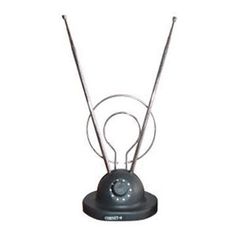
'Rabbit ears' antenna for set top use.
Once upon a time, tv signals were acquired for free via over the air broadcast. Well, nothing is ever really free, I suppose. Except the squandering of my charms, and even that had a cost - but that story is not the subject of this post. If there was a cost beyond the purchase of a television, it was the purchase of some form of antenna. Many people, living near the point of broadcast origin, could make due with nothing, or with rabbit ears. If you lived a little bit away from the source of the broadcasts, there might be a further cost with the purchase of an outdoor antenna, and once the evening network schedules began converting to color the follow up purchase of an antenna rotator to get a clear ghost free image.


Outdoor antenna with motor.
When cable came along, it was cheap, needed no set top box decoder, and carried only broadcast tv - because that's all there was. Broadcast then included the recently arrived UHF channels, which showed old movies and old tv shows. I still treasure the year I lived in my first 'on my own' apartment in Ocean City, NJ, where the cable brought Star Trek (then newly syndicated for re-runs) from a Philadelphia station at 6pm and from a New York City station at 7pm (a bit preferable, as the series from New York was shown in original broadcast order).


The Rotator control, which usually
sat by the 'easy chair'.
Eventually, HBO started up as a pay channel devoted to recent movies, shown uncut. Set top cable box decoders entered the scene. Other 'cable only' channels joined the fray. I suppose this plethora of entertainment could not have happened if the remote control hadn't come along about the same time as the antenna rotator. I was quite impressed by the first remote control we had, which was acquired with my Dad's purchase of our first color tv. Before that, I was the remote control. I didn't mind being told to jump up and change the channel - we didn't know anything different. (And I didn't mind being the remote in visits to my Grandmother or my Uncles. I supposed it was part of the deal of getting fed and being the kid.) Plus there was an extra added benefit of a bit of exercise.

One of the great inventions of all time, the remote control.
When home video recording began, I dove in. I loved recording programs (mostly old movies) that I would otherwise miss, and watching them later. I loved being able to fast forward through the commercials. And I really liked the idea of archiving the movies and programs I liked - at the time the Betamax and VHS cassettes weren't all that expensive.


Yes, I had a Betamax. Just like this.
Later models had better quality and stereo sound.
I got one of those, too.
And I still have it - but it needs a minor repair.
Fast forward to today. Cable now brings ever changing numbers of hundreds of 'stations', can provide what some advertising executive must laughingly refer to as 'high speed internet', Wi-Fi broadcasting that can't be turned off (although a passcode would be require to use it), and a 'land line' telephone line for those of us who prefer to be somewhat old-fashioned with that form of communication. (Today's everything to everybody media device telephones, and their cost, is worth a post of its own.)  Add in high definition and Digital Video Recording, and one's monthly bill for cable can easily reach a level which could inspire expense guilt in rich people (if they were to ever think about it).

The cable companies have, for many years now, given new shades of meaning to the concept of perfidy. They have created a world in which the cost of service isn't the cost of service. There is a rental fee for the set top box, a fee for high definition channels, a fee for this, a fee for that, various taxes, and service levels that boggle the imagination. I was lucky to get the classic movie channel as part of a promotional package - normally, I'd have to get all of the available sports channels to get the one channel in said group that is different (i.e. the classic movie channel). Hmmm, I'd best stop before the subject of this missive changes completely.

After years of ignoring requests to have my bill delivered electronically,
(known as 'going paperless'), I finally gave in and signed up.
It was truly wonderful not to have to deal with all that paper,
make decisions about how long to keep the bill after it was paid, etc.
The only problem? It took the cable company 9 months to stop sending a paper bill.
I should also note that a couple of years ago when I made peace with Comcast and got their service back, I was given their brand new cable box dvr - one of the first of that model given out. Within a year there was a replacement available that would do more - a lot more. Record up to 6 programs at once, and store many, many, many, many more movies and programs - among other improvements. I have yet to get it - I have too many movies and programs stored on my cable box that I haven't had a chance to watch. Oh, the problems of the modern world, eh?

The thing I enjoy the most these days is the DVR. At first I used it just to record programs I wanted to see but which weren't on at my preferred viewing times. Then came the discovery that the rewind function works for 'real time' tv. Let's say that yet another director let yet another actor mumble important lines of speech so badly that they could not be heard. (This problem is sometimes exacerbated by digital sound recording which can't seem to reproduce music and dialogue without it being either too quiet or too loud. Goldilocks would have never found 'just right', if you get my drift.) With DVR, one can simply hit rewind, raise the volume, and watch that part again. With DVR I can start recording a program like the Grammy awards, start watching the recording an hour or so into the program, fast forward through parts I have no desire to see, commercials, and so on and so forth, eventually catching up with the program's actual live broadcast before it is over. With DVR, 'Dancing With the Stars' can be reduced to a half hour's running time. And should a call of nature intrude while watching a broadcast, with DVR one can press the pause button, go outside and take care of business, and return to pick up where the interruption occurred.


The DVR also records in high definition (when you pay extra for the high definition in the first place) which includes the tv version of wide screen. Now there's a topic - wide screen tv uses a picture ratio of height to width that is not used by any movie company anywhere, ever. But these days we do away with much of what is possible and exist in the land of someone's definition of "good enough".

Now, I've been enjoying the possibilities of DVR for awhile. But last Saturday, my use of it turned into a triumph. The 4,727th Republican Party's Presidential-Candidate Debate started at 8pm, just as my radio show ended. I used the DVR to record it - in widescreen, color, high def, stereophonic sound, and watched it later. If the candidates had worn different costumes, it might have been mistaken for a World Wresting Federation brawl. The trick when watching is to realize that it is entertainment. Taking any of it seriously would result in a trip to the passport office just in case.


Speaking of my radio show (you must have known I'd get around to it) the first half of last Saturday's show took note of several birthdays, including a few of my favorite performers, like Jimmy Durante. The second half celebrated one of the composers of the Great American Song Book, Harold Arlen.

A young Harold Arlen, about the time he was composing revues for the Cotton Club,
and songs like, 'Stormy Weather', 'Get Happy', and 'Let's Fall in Love".
Arlen never promoted himself the way most of his contemporaries did. As a result, his contributions have been somewhat overlooked. It's odd, really - he composed some of the best pieces in the American Songbook, yet he rarely used the standard song form. He's often thought of as a composer of show music 'blues', yet he only composed a couple of songs in that form. If I'm still doing the show this time next year, I'll have to devote the entire 2 hours to him - there just isn't enough time to play most of his songs that should be played in such a program. Hopefully, I won't have another of my 'senior moments' - this time around I gave the wrong lyricist credit on one of my favorite Arlen songs, "Last Night When We Were Young". The wordsmith was Yip Harburg. As always, I hope any listeners enjoy the show.


Tuesday, February 9, 2016

Fat Tuesday

Today is Fat Tuesday. When I was a kid (raised Methodist) we used to call it Shrove Tuesday. In Great Britain, it is a day to consume pancakes. We used to consume donuts. I rather liked having a reason to consume donuts. The word "shrove" is derived from "shrive", which refers to a confession of sins, a sort of summing up if you will, for the purpose of repentance and seeking the help of the Almighty to obtain Absolution for your sins. In the case of Shrove Tuesday, one seeks absolution starting the next day (Ash Wednesday). On Fat Tuesday, one parties, joins the greater Mardi Gras Carnivale, gorges on fattening foods, and marvels at the convenience and poetry of the human situation.

With Carnivale crossing my mind, I thought I'd wander over to You Tube and see if any clips were available from "Orfeu Negro", a.k.a. "Black Orpheus". It's the ancient story of Orpheus and Eurydice, set in Rio during Carnivale. The bossa nova score is by Luiz Bonfá and Antônio Carlos Jobim. The film's attitudes towards the poor blacks of Rio are no longer acceptable to many, and I doubt that the film gets many showings now. Perhaps that is why, instead of film clips, the entire movie is available on YouTube - for Free! One used to spend years trying to see a movie like this, waiting for a screening at a revival house in the big city, or going to a museum, or an arts group showing a worn 16mm print. Now it is available at a click. (And, when there is commercial potential left, a fee.) It is unfortunate that today's films buffs will rarely get a chance to see movies like this on a big screen. But still.... Black Orpheus, for free.


Today is Presidential Primary Day in New Hampshire, the first actual vote by the great unwashed masses for this season. New Hampshire is a mostly white state that bears little resemblance to most of the country. Unlike, say, the just held Iowa caucus, in a mostly white state that bears little resemblance to the rest of the country. After today there will hopefully be a respite from the incessant commercials for those campaigning for the nomination. I live in a state which borders New Hampshire. We've been inundated with these advertisements for months. Both political parties, their supporters, their shady secret Political Action Committees, their candidates, the media, and the general populace will have plenty to repent tomorrow. Sadly, this Carnival simply picks up and moves elsewhere for a bit, before moving on again.

It's been a pretty shameful show this time around. Of course, endless campaigning means endless ad revenue to the media, which is now presenting the contest to select the leader of the country as something akin to the reality game shows which pervade broadcast and cable television. It's a constant onslaught of "who insulted whom, who's winning" reporting, presented in the style of a Facebookland Twitterverse of the nasty and belligerent scripted and rehearsed quote. The media companies are supposed to be impartial in their reporting, but that school closed a long time ago. It isn't difficult to figure out which candidates the corporate conglomerates are backing if one pays attention. One must remember, however, that to the media, this is still show business. Here's the Governor of one state, acting very much like the schoolyard bully he is by most accounts. Here's the Governor of another state, scion of a political family with two Presidents already in the till, who is doing so badly in the polls he has called in his 90 year old mother to shill for votes as she pushes forward with her walker - in the snow. I could go on and address some of the real issues, but that proves ultimately (and extremely) disheartening. Reality seems to have little to do with it anymore.

                                --------------------------------------------------------------------------

Most of my radio show this past Saturday (February 6th) was spent visiting the airwaves and jukeboxes of late January to early February 1945. Frank Lowry, known for his whistling abilities, showed up a couple of times. The finale was a February 6th, 1945 broadcast with Vaughn Monroe and His Orchestra. As always, I hope any listeners enjoy the show.


Thursday, February 4, 2016

Loads of hot air

At 7:45am this morning, the temperature was already 45 degrees Fahrenheit. While this may not seem remarkable, it is not the normal order of things in Vermont in February. The snow and ice from the only snow which has had accumulation so far this winter is just about gone. In February.

It is political season in the U.S. (when isn't it anymore?). The Republican party, which controls both the U.S. House of Representatives and the U.S. Congress still denies climate change. Although, to be fair, some in that party are now beginning to admit that it is happening - they just don't think that humans have played any part in it. So, there is no need to address pollution, carbon emissions, how we supply our energy needs (meaning don't mess with big oil or nuclear power), or do anything to address the situation. Other than provide more tax cuts and legal protections to the corporations which have played a major role in creating this mess.

Bernie Sanders is a U.S. Senator from Vermont, the state in which I live.
He is running for the Democratic nomination for President.
This is the kind of plain, direct statement he usually makes.
In December, an international accord was reached in Paris to lower greenhouse gas emissions. While it is nowhere near what is needed, it is at least a start. It's taken close to what, 40 years, to get this far? (It was in the mid 1970's that scientists gave up on the idea of aerosols as possibly creating global cooling and more or less agreed - and published - that global warming via the 'greenhouse' effect was actually happening. Climate change theories that incorporated a human causal factor go back to the late 1800's.)  The Paris accord hasn't been signed yet - that won't happen until April.
This is one of the nicer responses to Senator Sanders
from the conservative right. So far, the money source
funding "Rebooting Liberty" has not become public.

The agreement had barely been announced when Republicans in the U.S. government made it clear that they did not support it, and that they would work to prevent the President of the United States from being able to deliver on promises made to other countries in the negotiations (in which our country and our Secretary of State, John Kerry, played a major role). The House Committee on Science, Space, and Technology is against it. That committee is chaired by Lamar Smith, Republican form the state of Texas, who believes that climate change not only doesn't exist, but is based on data that was intentionally manipulated to produce this result for some nefarious purpose. Lamar Smith, by the way, has received well over $600,000.00 from the fossil fuel industry during his years in office. (Although he hasn't stated it explicitly, he has made statements which could easily be interpreted as rejecting the concept of evolution. It plays well to his base. Something like 47% of Republicans in one survey stated outright that they do not believe in the "theory of evolution".) The House Committee chaired by Representative Smith began new hearings on this subject yesterday, February 3rd. The hearings have a title - “The Paris Climate Promise: A Bad Deal for America".  The Chair's opening statement included the thought that the deal would help destroy the U.S. economy without  producing any appreciable result.

As the primaries for the Democratic and Republican nominations for the office of President of the U.S. are underway, one might wonder about the candidates' respective positions regarding climate change. The two Democratic candidates consider the issue real, and one that needs immediate responses. The top three Republican candidates (as of this writing) all either deny climate change outright, or deny that mankind has had a hand in it.

Shirley Temple and Eddie Cantor

My radio show last week was about a different U.S. President, as the program took place on January the 30th, the birthday of Franklin D. Roosevelt. When he was 39, Roosevelt contracted infantile paralysis, a disease so old that it is depicted in Egyptian hieroglyphs. It left him crippled. As he searched for a way to deal with it, he discovered the healing effect of the Warm Springs spa in Georgia. He won the Governorship of New York after campaigning in a wheelchair. When Warm Springs fell on hard financial times, he bought it and opened it to anyone who needed it, regardless of ability to pay. By the time he was elected President, it had eaten up 2/3 of his fortune. His first year in office, at the height of the Depression, he held a Birthday Ball whose proceeds would go to his new Warm Springs Foundation. It raised over one million dollars in one night.


In 1934, the Presidential Birthday Ball concept went national. Any community which held one would split the proceeds with the President's foundation. The foundation also began to fund research for a cure for the disease, which was becoming known as 'polio'. One night, during a radio show, entertainer Eddie Cantor asked all of America to contribute, to send any spare change they had, even a dime. He wanted to see a march of dimes from every town to the White House. It wasn't long before the President's foundation became known as the March of Dimes. Roosevelt died in the Spring of 1945, just before the fall of Germany in WWII. That January, the Birthday Balls contributed $18.9 million to the foundation. After his death, the U.S. Congress requested the U.S. Mint honor Roosevelt by putting his profile on the dime.


The research funded by Roosevelt's foundation resulted in Jonas Salk's vaccine, which became available in the mid 1950's. Polio was, for the most part, wiped out. Sadly, it reappeared a couple of years ago in war torn Syria.

This week's radio show also took note of Eddie Cantor's birthday, which is on January 31st. Far too few pieces were played for jazz trumpeter Roy Eldridge, whose birthday was on January 30th. As a finale, there is the January 30th, 1946 broadcast of the Old Gold show, better known as "Songs By Sinatra". The Benny Goodman sextet appeared in the guest slot.


As always, I hope any listeners enjoy the show.


Friday, January 29, 2016

Well, that was fun.

"It's been how long since I posted?", he thought to himself. (Take that rules of punctuation.) Uh, oh. He's feeling a little surly today. Ah, yes, it's 'talk about yourself in the third person day'. Actually, I've no idea if such a day exists, but why shouldn't it? After a quick Google search, it turns out it does exist - every Third of March. Should'da known. As I look up I see that it is snowing to beat the band, although why anyone, or for that matter the snow, wants to beat the band is beyond me. (ba-dum dumb)

You'll have to excuse me, I've been cooped up a bit too long. (Internal struggle - overcoming urge to add picture of Gary Cooper.) That freakin' cold I had since just before Thanksgiving to about Christmas either came back again, or I got another one. Only this time, I went down for the count. I'm not the kind of guy who can lay in bed when I'm not feeling well. Usually, I get up, clean myself, up, read, watch tv, listen to music, etc. and keep things fairly quiet. This time I ended up in bed for three and a half days. And it wasn't like I was just lyin' there staring at the uneven place on the textured plaster ceiling - nope, I slept. Last Saturday (Jan, 23rd) I didn't even do my radio show.

Speaking of my radio show, I've got a couple of them to catch up on posting here. So, let's get the first one out of the way right now with the show from Saturday January 9th, 2016. That program began with a tribute to Kitty Kallen, songbird with the bands of Jan Savitt, Jack Teagarden, Jimmy Dorsey, and Harry James. Ms. Kallen shuffled off the mortal coil on January the 7th. Then it was off to January 1945 as the Philco tuned in The Kraft Music Hall with Bing Crosby (and guests Spike Jones and His City Slickers!).


Between being constantly sick (all chest and up, thankfully), trying to keep the radio station going, trying to shop for food while in a muddle-daze, trying to find enough energy to cook a decent meal, you know - the usual suspects - I have to admit that I'm not getting a heck of a lot done. I have watched a couple of movies I had on the cable box DVR. The other night I watched the 1936 "Things to Come", with a script by H.G. Wells based on his own book. I last saw it in the early to mid 1970's. Made in England in 1936, the story starts with an all out world war in 1940, which more or less ends in the late 1960's with a new dark age and a plague; salvation arriving in the 1970's with the intervention of scientists and their "Wings Over the World" organization. By 2036, the populace begin to rebel against the more or less totalitarian technocracy that replaced the totalitarian society before it. It's the triumph of the luddites that gives rise to philosophical debate. That's a heck of a lot of oversimplification, but the subject is worth noting - let's face it, there just haven't been all that many movies that ruminate on the nature of war, good versus evil, the future of civilization, the nature of progress, and humankind's place in the universe. Besides, I find it wonderfully reassuring the cities of the future will be of art deco designs.


I have to make an admission here. It's been many years since I really gave myself anything much for Christmas. From my childhood years into my late 40's, I was an active film collector. I miss movies shown at a proper size. I like movies on tv well enough, but at the modern standard (?) of 32" or so they are still tv images. Certainly I watched many years of movies on a 19" screen growing up. But most movies are meant to be bigger than life, or at least bigger than a tv screen. So this past holiday, after scrimping and saving for quite awhile, I gave myself a cheap little video projector. It was one of those momentary "oh, hell, just do it" moments. And I'm very happy I did it. It's a tad awkward to use, as the method of projecting I prefer, down the length of my space, will give my own viewing a large and wonderful picture, but won't work very well for inviting guests over - due to the arraignment of the furniture they'll be far too close to the screen. My old motorized 5' screen is perfect for older movies with a more or less square shape (a ratio of 1.33:1). But it isn't big enough for the tv version of widescreen (16:9, which isn't the size of any widescreen process ever used). My 10 foot screen would be perfect for this, but at the moment it is in storage in a friend's barn. It will need a bit of sprucing up and possibly bleaching of the surface to make it useable, and even then that designation may be somewhat questionable. At the moment, I'm simply using a wall that is a light beige color, projected across the room so friends can sit and watch as well. Here's a pic of the widescreen image, shown in snowy day daylight (thin drapes closed, but still light enough to read a book or newspaper)(sorry about getting the fan blade in the picture). The image is roughly 6 feet long by 4 feet in height.

A scene from 'Jason and the Argonauts' in the tv version of widescreen.
Of course, this jump in technology will come with added costs. A standard DVD is of about the quality of older tv images. Over the last few years, I've grown quite accustomed to high def images. The projector isn't full high def (which would be 1080 pixels); that would have cost far more than I could afford. But it is the lower form of high def (720 pixels) and is pretty darn good, especially considering that it was priced quite a bit under $200.00. To be honest, I'm still surprised I spent that much money on myself. The problem is that movies recorded in 1080p high def via my cable box DVR are of excellent quality when projected - much better than DVD. Now I'm possessed of the idea that its time to go Blue Ray DVD, which is 1080p Hi Def. (I'm so old fashioned I prefer to own a copy of a favorite movie instead of paying per view.) That changeover is not likely to happen, and so far my DVDs look just fine. But the obsession has started.

Now that the images are of a decent size, I find I'm watching movies again. It's not like watching half heartedly on tv while I play solitaire on the computer, and etc. I mean fully engaged watching. This has happened just in time. The political commercials on the television are depressingly overwrought. My sanity needs to avoid them. The Republican party is out of control. All of their advertising (one can't forget these are infomericals selling a packaged product) is set in an alternate world America as they sell fear - where there are nasty terrorists among us plotting their daily bombings and destruction of our homes. Look - is that one? Report them now. An America where affordable healthcare has caused a majority of the populace to lose their jobs and live in dire poverty. An America in which the President of the United States has betrayed the country, and where those running for the nomination in the opposing party aren't fit for office. This isn't a distillation of what's behind their ideas - they say these things. Boldly. They talk about carpet bombing, they talk about rebuilding our military (which is still the largest and best trained in the world) and going after the terrorists of ISIS, capturing those they can, and carting them off to the Guantanamo Bay detention camp for the rest of time, where we -will- learn what they know. The implication of torture is pretty hard to miss. Oh, yeah, they are all for constant electronic monitoring of the populace. Give up that freedom in order to save it.

This political situation was going to be the focus of today's post, but I find it overwhelming to even think about today, as this is the first day I am really starting to feel better and I have a lot of other stuff to catch up on. The sad thing is these candidate 'contenders' don't even realize that they will not really be in control. They rail against Vladmir Putin, as though he has any real power left. When he was rattling the sabers, friends of mine were quite concerned that he was going to start a war. Russia, like China, is now part of the world economy. The interdependencies of trade and commerce have moved the actuality of power to the corporations just as predicted. At present, they can't afford war. There is too much to lose, and not enough to gain. When war comes in the future, it will be over economic spheres of influence, over who controls what products, what information, what data. Wars over who controls what geographic areas are passe, they are old school. That world is rapidly fading away.  It's part of what makes the immigration debate in this country so ridiculous. Forget building walls on our borders. Forget "figuring out who they are before we let them in" - that is already being done. If these people manage to get one of themselves elected, I've no doubt that the walls will go up. The real question is whether they are there to keep the infidels out, or the unwashed populace in.

There's a lot more that's been bouncing back and forth, but I need to get doing other things.

My radio show of Saturday January 16th took note of the birthdays of Sophie Tucker (the Last of the Red Hot Mamas), trumpeter and bandleader Billy Butterfield, drummer and bandleader Gene Krupa, and promoter, lyricist, and music publisher Irving Mills.


As always, I hope anyone who listens in enjoys the show(s).

Thursday, January 7, 2016

Thoughts on Cleaning Up

The colored lights and garland around the porch door have been taken down, as has the Christmas tree. The place has been un-bedecked and de-festooned. The accoutrements of the holiday season have been packed up and stowed away once again.

In my family, the tree and all the trimmings came down on New Year's Day. Even though I was raised a Methodist ("Baptists who can read"), I long ago adopted Epiphany as the day for such activities. This change was not due, as some of my family no doubt supposed, to any laziness on my part. If the truth be told, I am especially find of Christmas trees and "twinkle bulbs". I like the concept of the Season of Light. I've always thought it a bit awkward to take all of the color and glitter down just as we get to the coldest, bleakest, darkest part of the year. But if it has to come down, and I suppose I appreciate it all the more because it is something of a limited engagement, then I suppose waiting out the 12th night makes some sense and is completely justified. The way I now see it, I keep the lights on (or the 'star' shining, if  you will) against the darkness. But in today's world, if no Weismans show up bearing gifts by 12th night, then the chances of it happening are about equal to Linus seeing the Great Pumpkin.

This year I was especially proud of myself, certain that I hadn't forgotten to pack some odd bit away. These last several years there has always been the extra bulbs, or the extra hangers, or the gift wrap - something - that gets overlooked. After everything was moved into the storage unit in the cellar, I did discover the useable top of a broken ornament, and yes, a holiday CD a friend made for my Yuletide amusement and delectation that hadn't made it into the boxes. Ah well, there is always next year.

The season here was unusually warm. On December 24th, the temperature was in the low 60's fahreneight. A few days later, the temperature dropped into the teens and single digits and we finally got a couple of inches of snow. It took a couple of weeks, but winter has finally arrived and announced itself. In case there was any doubt, the garden catalogues began to show up in my mailbox. Who was it who said, "Temptation is a seed catalogue in January"?

My telephone just rang. For the second time today the call was from the same alleged security company. Both calls were quite obviously the same male digital 'computer voice'. The first time I simply hung up. For this second call, I noted, "John (or whatever name was used), you sound like a recording." There was a pause. I continued, "I am listed on the National Do Not Call Registry. Please remove my name form your records and do not call again." At that point, the computer voice split into three or four voices - all of them were laughing uproariously.

For last Saturday's radio show, I decided to continue the methodology of the week before, and feature clips from the radio of various holiday seasons, this time focused on shows from New Year's Day and January the 2nd. As always, I hope listeners enjoy the show.


Oh, and Best Wishes to All.
Except the programmers of smart assed computer robo calls.
(Although I have to admit, the laughter thing was pretty funny.)

Wednesday, December 30, 2015

Fast away the old year passes...

The title of today's post is from an old holiday song, "Deck the Halls", an 1860's version of a much older Welsh song, which dates back to the 1500's. The original, "Nos Galen", was a song meant to be sung on New Year's Eve. An English translation of the lyric, published in 1794, has it as, "Oh! how soft my fair one's bosom, fal lal lal lal lal lal lal lal la. Oh! how sweet the grove in blossom, fal lal lal lal lal lal lal lal la. Oh! how blessed are the blisses, words of love, and mutual kisses, fal lal lal lal lal lal lal lal la."

At any rate, I should note that the 'hall' hereabouts was properly bedecked and festooned for the season yet again. Once of these years I keep expecting that I'll stop doing it; but it hasn't happened yet. Acquiring and putting up a tree and etc. has been my own little statement of victory over the vicissitudes of life, a triumph of survival for another year. There have been years when it almost didn't happen, but fate (and the kindnesses of friends and strangers) has always intervened. And so the tradition continues. The tree sports the decorations which were given to me over the years, and the little niceties (such as two little birds touching beaks) once arranged by a close companion. It's my annual tribute to missing friends, the family I was building before time and disease changed things.

In better days, when I had jobs with real benefits, I always took some of my vacation time during the week between Christmas and New Year. My father used to do that. Both of his brothers did that. I liked the idea and continued it whenever possible. They all lived close by each other; there wasn't any real need for them to do it for family visits. Although, when I was young, their Aunt Norma, my Great Aunt, would come up for the week from Washington, D.C. where she lived and worked. And their Uncle Less and Aunt Arlene, both of whom lived several towns and some distance away, would make their yearly pilgrimage to see their visiting sister,, as well as the rest of us. The years, and changes in employment practices (both theirs and mine), eventually ended the week of holiday vacation time off. When I was a teenager, one of my aunts declared that the family should henceforth only give presents to the children (she had the only two at the time). The family, never close to begin with, began to drift apart. Perhaps my attempt to continue the vacation tradition, and my insistence on continuing to use the kinds of Christmas tree lights and decorations prevalent in the late 1950's and early 1960's, was/is really an all too typical longing for family, and a more innocent time before we all changed and grew apart. Maybe it's just because I like that style better than what followed.

Tomorrow is New Year's Eve. As I grew into my teens in my small town, I would join family members in staying up to watch Guy Lombardo and His Orchestra play in the New Year from a nightclub in New York City; a brilliantly lit ball would slowly descend a mast on the old Times tower until the New Year was declared in dazzling lights, cheers from the assembled crowd, cheers from the nightclub where Mr. Lombardo's wheezy band played 'Auld Lang Syne', 'Always', and other chestnuts of a lifestyle which had already faded and passed. As my father began going away on business trips, and then started dating again, I would find myself sitting home alone, pathetically watching the same routine observances year after year, vowing that another year would not find me in such circumstances. Of course, the next year did, and the years after that. The year I moved to New York City, I headed down to Times Square to join the hoopla. While being part of the madness was fun, I was somewhat uncomfortable in the crowd. Partly, it was the crowd. And partly it was the same kind of discomfort I always felt at parties where I didn't know anyone, and routinely moved myself to a corner where I could watch other people having a good time. I've never been comfortable at parties, even when I know the people there. I wanted to be, I wanted to have a good time, I just didn't know how to go about it. I was too socially awkward and shy, with little patience for some kinds of small talk, hiding that fact behind manners and a ready smile.

I went to Times Square on New Year's Eve one or two more times. At one point, I managed a large bookstore at 43rd and Broadway, right in Times Square. At 2pm on December 31st, we would close the store, put plywood over the windows, and get the hell out. I often joke that that approach was good advice for life. I never thought of that until I was past 50, however, and often never had that much sense when it might have done some good.

I never made enough money to go out to the nightclubs of my own times. I never did get to go to, or stage, any fabulous New Year's Eve parties. There were a few years when that night was held close in a lover's arms, but to tell the truth, I don't remember them very well. The years do tend to blend together. I became content with being a single person. Except for the occasional New Year's Eve, watching whatever passes for the party I could never get to, when my teenage self knowingly mutters that not much has changed in 50 years. And when that little bastard appears with his remonstrations, I just smile, and adjust an ornament on the tree.

For last Saturday's radio show, the old Philco's tuning mechanism got a workout as we sampled a number of different Holiday Week programs over a number of years, listening to broadcasts with everyone from Duke Ellington (performing 'Let the Zoomer's Drool') to Bing Crosby, Artie Shaw (with Roy Eldridge), Tommy Dorsey, Kay Kyser, Cab Calloway, and Louis Armstrong. And, of course, Guy Lombardo.


As always, I hope any listeners enjoy the show.

Thursday, December 24, 2015

Once more, Dear Friends, unto the Holiday breech

Yet another attempt at this post (my third)  - Blogger is misbehaving. Word wrap vanished into the sub-electronic ether. Certain words seem to be acting as control codes. Typing after the end of a sentence seems to produce no result. If this continues, Blogger will get a few lumps of coal in its Christmas stocking.

And now (drum roll) the paragraphs it took half an hour to produce, thanks to the magic of cut and paste (cymbals clash):

Well.

It's 55 degrees Fahrenheit outside on the day before Christmas. This is not the usual December weather for Vermont. Somewhere in the back of my mind, I hear Bing Crosby, Rosemary Clooney, Vera Ellen, and Danny Kaye singing, "snow, it won't be long before....". Fat chance. The lyric, by the way, is from the movie "White Christmas". Not this year.

The egg nog, which takes about five hours to make, is now at the stage where it is 'resting' for about three hours in the refrigidaire. (It's the olde Joie de Cuisiner recipe I favour, and contains a somewhat Bibo Vocatus component.) (I am tempted to add a polite "heh, heh", but considering the season, that appellation should really be a "ho, ho, ho", which won't be quite accurate until I've had a few cups of
ye old recipe.)

Hooray, the blogger problem seems to be over. Perhaps there was a site update underway when I started writing. I just popped in to post last Saturday's radio show:

 
Holiday music is an interesting phenomenon. For the first thousand or so years, all the big songwriters did what anyone trying to make a living would do - they went where the money was. Which means that they wrote for the Church. My interest is in the American Pop Song form, which came along much later. While there were a couple of tunes making the rounds in the 1930's, songs like "Jingle Bells", and "Winter Wonderland", Christmas pop didn't really hit the big time until December of 1941. Oh, Irving Berlin had given the idea a shot in the late 1930's with "Hello Mr. Kringle", which was recorded by Kay Kyser, but there wasn't a lot out there unless you wanted to hear Bing's 1935 'Adeste Fideles', with 'Silent Night' on the flip side. (By the way, the Silent Night used an Irish men's chorus and is really quite lovely. Bing recorded the song several times, starting in 1928 with Paul Whiteman. The 1935 release was held up for awhile, as Bing did not wish to profit from a spiritually aligned piece of music. It was released after the label agreed to donate the proceeds to a charity. )
 
In 1940, Irving Berlin sold an idea to Paramount Pictures. As part of the package, he would write all the music for a story about an Inn (with a floorshow, naturally) which would only be open on holidays. Paramount assigned the leads to Bing Crosby and Fred Astaire. Early in 1941, Berlin composed what would become the biggest selling single of all time. No one really recognized what they had at first, "Be Careful It's My Heart" was expected to be the big hit.
 
On December 7th, 1941, the United States was brought into the Second World War by the bombing of the US fleet at Pearl Harbor and Guam. That Christmas day, Bing introduced the song on the Kraft Music Hall radio program, which he hosted. 'Holiday Inn' was released in August of 1942. The almost mythical imagery of a New England winter struck a chord in a nation at war. By that October, "White Christmas" had become the most popular song on the charts, and it stayed there through January of 1943. It was so popular, Decca wore out the original masters and called all the parties back into the studio to recreate the recording five years later.
 
'Holiday Inn" would go on to inspire a chain of motels, and a remake released in 1954. That version, "White Christmas", was released in VistaVision and Technicolor. It almost didn't get made - after the death of his wife, Crosby withdrew to spend more time with his troubled sons. Fred Astaire was unhappy at Paramount and withdrew to go to MGM. When the project got back on track, Donald O'Connor was hired to replace Astaire, but illness intervened. Danny Kaye was brought in. When I worked in film distribution, one of the companies I worked for specialized in repertory and art product. They got the theatrical rights to Paramount Pictures (well, at least the ones that hadn't been sold to Universal). The rights to the "White Christmas" movie were another matter. From what I heard, Mr. Berlin, the Crosby  estate, and Mr. Kaye all had percentages, and all wanted One Million Dollars each. Upfront. And that cost would be on top of dealing with VistaVision, an early widescreen process which had a distortion free image by exposing a larger area of 35mm film and running it horizontally through projectors; i.e. equipment that no longer existed. Somehow it all got done. Truth be told, it's not a particularly good movie, but audiences love it. With a limited amount of time for a release window, it was the company's biggest grosser until they put the classic Warner Brothers cartoons back on screen.
 
At any rate, I digress. After 1942, pop Christmas songs began to fill the charts. Until recently it seemed like every performer who ever existed had to release a Christmas album. There are country Christmases, Hip Hop Christmases, Bebop, Jazz, Lounge, Accordion Christmases, drunks performing Christmas songs, and etc. - the variety is quite incredible and possibly worth some work as a study in mores and marketing.
 
My Holiday shows are comprised of (mostly) non-threatening secular pop songs which are gluten free as an added bonus.


As always, I hope any listeners enjoy the show.
With Bestest Wishes for an extravagantly Merrie Christmas
and a Most Excellent New Year


p.s. Dear Santa, if you take requests, please put some coal into the stockings of the folks responsible for spell check programs. They can be quite wonderful, but sometimes.....


Saturday, December 19, 2015

The Bug Going Around

Holy almost Christmas!

I've had some sort of 'bug' for weeks now (by which I mean a pathogen, not something of the hemipteran genus or, for that matter, anything slightly arthropodic). I haven't had more than a mild cold for a number of years. I used to get every little something that wandered by, and always had a difficult time getting rid of it; if the average person had it for three days, I could count on a week. 

This 'whatever it is' started the week before Thanksgiving. I've visited with my doctor, in her professional capacity, twice now. This week she reluctantly proscribed a second round of antibiotics. (The doctors no longer give a shot of penicillin, and keep the antibiotics to a minimum.) Had it not been that I am an asthmatic, she might not have done it. While I would normally agree to keeping such things at a minimum, I have to say that this second round seems to be winning the day.

I wrote "seems to be" simply because I have twice thought I'd gotten over it only to have it return. It's all centered in my chest area and up. After the first two weeks, my lungs recovered, but the other symptoms either returned, or remained. Doctor's nurse noted that this exact scenario has been reported by many patients. My energy levels, which had been disturbingly low, have been increasing.

All of which is this week's explanation for not getting last Saturday's radio show posted. (I felt decent enough both of the last two weeks to go to the studio to do my show, only to return to the mire both times.) I'm beginning to think that I should start a new blog devoted to excuses for not getting a post written, or finished.

I had wanted to spend a little time jotting down a few thoughts about the show and its subject. Last week's show was on December 12th;  Frank Sinatra's 100th birthday. Mr. Sinatra is one of the patron saints of my program. The holy trinity also includes Johnny Mercer as the Patron Saint of Songwriters, and Ella Fitzgerald as the Goddess of Song.


For many of my generation, and most of the younger set, Sinatra has been little more than a late night comedy show caricature, a mobbed up, intolerant arch-conservative, sexist pig. In his later years, he certainly seemed to be trying to live up to that image. But that isn't the real story, it's only the end game that went along with the need to continue performing after the voice had gone, when all that remained was a punch drunk vocal style that relied on arrangements which had once been breathtakingly dazzling, but which had become as punchy as the singing.

The real story is much more interesting, but as I'm working on tonight's show, I don't have the time to tell any of it. I did post a sort of highlights version on the show's Facebook page, using photos with biographical notes in the comments area. Hopefully, this link will take anyone interested to the post. (Non-Facebook types will be able to click through the slideshow, but won't be able to leave comments, or etc.) If that link doesn't work, use this one and scroll down to December 12th: Recycled Radio's page on Facebook.

At any rate, here's the 'Sinatra's 100th Birthday' edition of my little radio show. As always I hope listeners enjoy what they hear.


p.s. Happy Birthday, Mr. Sinatra. And Thanks for all the music.