Showing posts with label Ocean City NJ. Show all posts

Thursday, December 1, 2016

'The Last Waltz' and old friends.

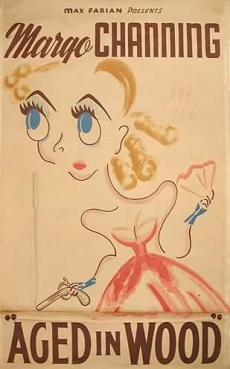
A bit over a month or so ago, I discovered that buried deep in the "free movies" section of my cable company's streaming options was one for Turner Classic Movies. I'd often wished they would have one, and suddenly it appeared as though the Cinema Gods had smiled upon the retired movie lover. Titles available at first seemed to be those which had just shown on TCM proper. That has changed a bit, with other titles not on the recent schedules popping in. Most of the titles are only there for 5 or 6 days at a time. As my cable box's digital video recorder is almost always full, I was over joyed to get a second chance to watch titles I had missed, or old friends which I wanted to see again. last night, for instance, I watched a 1942 MGM potboiler about an unfortunate event befalling a gold digging Broadway starlet:

I'll comment on that movie another time, but just as a 'circle of life' kind of thing, I'll note that I used to work in Grand Central Station a long time ago. I will add that it made for a rather interesting almost a double bill, as the late afternoon/early evening had been spent with a friend who came over to see the restored pre-code 'Baby Face', which had been on my DVR for two years waiting for the perfect time to watch it. Notes on that one later, as well.

At any rate, last Saturday night I turned on the video projector, intending to go to the streaming TCM option to see what might be expiring that I'd like to see. I had left the cable box on a Vermont PBS channel; 'The Last Waltz' had just started. My immediate reaction was to email a friend to come over - he had been invited to go to see the live concert but chose not to go. I also figured that it would be constantly interrupted and was being used as pledge bait. That turned out to be correct, but I watched the whole thing (slightly over 3 hours) anyway. It had been a long time since I'd seen it. The concert was the Band's farewell performance, held on Thanksgiving in 1976. Adding to the frustration of the breaks was a pledge promotion for a Blu-ray (only available as part of a set of CDs) which had been restored and approved by the filmmaker (Martin Scorsese), with it's soundtrack remixed by Robbie Robertson (member of The Band who produced the movie) for Dolby 5.1. This was frustrating for a few reasons. 1. I couldn't afford it. 2. I didn't have the room on the DVR to record it. 3. The version they were showing had a standard stereo mix. It was still a delight to see it again. Of course, I looked online to see if this new edition was available. It might be a repackaging of previously available material, or not - information was scarce. Now, I can't go to any website without being confronted with ads for 'The Last Waltz 40th Anniversary' special set.


I've mentioned elsewhere in this blog that in the late 1960's and early 1970's, I used to help run a counter-culture coffee house in Ocean City, NJ, called the Purple Dragon. Ocean City had originally been a Methodist camp meeting. When land was sold, a clause was put in the deeds that should the sale of alcohol ever be legalized on the island, the land would revert to the possession of the Methodist Church. Now, when I say that Ocean City was an island, I do mean that literally, not figuratively. The main bridge was at 9th Street. Across that bridge, on the mainland, was a town called Somers Point. And, on one side of a traffic circle, there was a very large liquor store said to have the highest volume of sales in the entire United States. (Across it's access road was a popular club, 'Your Father's Moustache'.) On the other side of the circle was an even more popular club called Tony Mart's. Just next to it was an old fish market. The Methodist church, which funded the Purple Dragon, got that building and opened another coffeehouse, called The Fish Market. (I think that was supposed to be a display of ecumenical humor.) Now, I spent many an evening at the Fish Market. I only mention this as it is my tenuous connection to Tony Mart's. The Band used to play there under the name of 'Levon and The Hawks', a leftover form the days when they played with Ronnie Hawkins. They were, in fact, playing there when Bob Dylan made them an offer to become his back up band.


Needless to say, I was a fan of both The Band and Mr. Dylan. When Dylan ended a multi-year retirement (after the motorcycle accident), he did so by going on tour backed by The Band. When they played Madison Square Garden as the tour's last stop, I was there - with my friends Richie and Keith. That's the same Richard, by the way, with whom I go on camping and canoe expeditions into wilderness areas of the Adirondacks. (Trips which I credit with maintaining my sanity.) At any rate, I went to see 'The Last Waltz' when it played in the theatres. When another friend, John, bought a building in Brooklyn (in partnership with his brother) to rehab, they threw a party. The idea was that they would have something different going on in each room for guests to enjoy while wandering around. At the time, I was working for a film company which had the rights to 'The Last Waltz', and managed to get my hands on one of the brand new 16mm prints to show in one of the rooms. That's the same John, by the way, who was instrumental in my moving from NYC to Boston, and who took me on my first car culture excursions, as well as my first trips to Vermont. He was also one of the kind folks who helped me move here. I've lost contact with him over the years, much to my regret. So John Chiafalo, if you stumble on this, please get in touch.

Now, I'm not going to go into the whys and wherefores of what is probably the best rock and roll concert film ever made, or some of the problems it had. Or the sadness of the years and realizing that Richard Manuel, Rick Danko, and Levon Helm are no longer with us. What I will say is that if you've never seen it, you owe it to yourself to do so. Here's the concert's, and the movie's, finale (an encore was used as the film's opening). Joining the Band are Bob Dylan, Neil Young, Joni Mitchell, Eric Clapton, Neil Diamond (Huh? - don't worry about it), Paul Butterfield, Dr. John, Van Morrison, and Ronnie Hawkins. Oh, yeah, when you start the clip use the full screen option if it's available to you. And, as the filmmaker requests, turn up your volume.


Monday, May 27, 2013

Dispatch

So here I am, 62 years old, writing from the front lines of early retirement on Memorial Day. But it's not the real Memorial Day. I'm old enough that I remember when Memorial Day was on May the 30th. That was before the United States Congress changed it to a 3 day weekend shopping extravaganza intended to kick off the summer vacation spending season.

I've lived in New England for over a quarter of a century now. Here, the summer season used to be July 4th to Labor Day in September (that's the phony Labor Day; the one the rest of the world celebrates is on May the 1st and honors events that happened here in the U.S. of A., which big money interests don't want people to know about let alone remember). With the change in the weather the summer season starts earlier here now. This year has been a little more like the old days, with the result that newscasts bemoaned the rainy and cool weather we had Saturday and Sunday - so many open campsites, so many unused barbeques.

Memorial Day started when the widows of the Civil War (or the "War of the Insurrection of the Southern States" as it used to be known in these parts) brought flowers of remembrance to decorate the graves of soldiers, "Decoration Day". After other wars it became "Memorial Day". There used to be parades; people used to display the flag. When I was a kid, it was a mixture of honor to the fallen and patriotism with the jingoistic flavor of the Post World War II era.

By the time I was a teenager, the War in Vietnam was oh so au currant. But just as television and its news programs had shown the lies of prosperous equality versus the malarkey we were fed through civics classes and entertainment, it also told uncomfortable truths about Vietnam. It became more and more difficult for me to accept the unquestioning flag waving exemplified by a mirror I found in 1969 with a painting on it of Stephen Decatur with the Carl Schurz quote (attributed to Decatur), "My Country right or wrong, My Country!"

The other day, I found a movie coming attractions trailer on the internet which I decided to play. One of its stars is a young man whose career choices have interested me more than any talent he has displayed (which is considerable). He played Harry Potter in a stage musical he co-wrote and co-produced in his teens. He showed up on the tv show "Glee", playing a gay teenager in his first relationship - it is a main story thread. Such things were unthinkable once. Anyway, as the trailer played there was one quick shot that made me pause it. I was right, it was the boardwalk of my once beloved Ocean City, NJ where summers started on Memorial Day weekend.


There's a "Subway" on the boardwalk now. A chain store. When I lived there, chain stores had names like A & P, or Dairy Queen. And they weren't on the Boardwalk. And now there's junky signs. It's actually worse than how it looks in the frame grab. Here's another contemporary view:


Back when I lived there, back before there were giant cheap backlit plastic signs, back before there were BigBucksMarts, before there were chains of inedible overblown thin hamburger patty plastic arches, back when gaudy wasn't acceptable unless you were whoring on 8th Avenue in New York City, back when Memorial Day had just been changed to a Monday, it looked more like this:

The last picture is a little out of focus, like so many memories tend to be. But you can see that the hard sell isn't there, signs are on a human scale. By today's standards you might say it's 'quaint'.
 
In the 1970's or so, Memorial Day Weekend became the opening of the Hollywood extravaganza season. When I was in the business, a few of us used to say that a good picture would play in any season. When one studio dared to open a big budget picture at the beginning of May, the other studios thought they were crazy. It played. The old patterns (which had been new patterns maybe a decade before) started changing. Now it seems like almost every movie has a budget well over one hundred million dollars - and that's before advertising. Twenty years ago, an extremely successful movie might gross one hundred million dollars. "Iron Man 3" opened 3 weekends ago and has already grossed $1.15 Billion worldwide. And that's before cable, tv, DVD, Blue-Ray and streaming internet sales, before merchandising tie-ins. It's a live action cartoon. They all seem to be live action cartoons anymore. Well, this year there was a new adaptation of "The Great Gatsby", which has grossed over 100 million domestically, but in Brattleboro it was pushed off screen after two weeks to make way for "Fast and Furious 6" and "The Hangover Part whatever". Basically, live action cartoons. Don't get me wrong, I like live action cartoons. And these are usually very well made special effect bonanza live action cartoons. I can't often afford to part with close to ten dollars to go see one, though. And here it's not even in 3-D. But what happened to the other movies, you know, the ones that just told stories and attempted to uplift the spirits? Oh, we get the occasional art film about 90 year olds facing death with dignity, but that's not what I mean. We just don't live in a world where they make beach party movies with guest musical stars anymore. They don't even make suggestively dance your asses off in the Catskills summer movies anymore. Unless the dancers have superpowers and their pasodoble is used to kick the villains into the stratosphere.
 
A news article I read this morning reported on a study which revealed that the IQ's of people in western civilizations have declined by an average of 14 points since the Victorian era. That would include the Civil War, the Insurrection of the Southern States against the idea of Union.
 
And that brings my little roundelay back to Memorial Day. I don't like standing armies. I don't like the idea of conscription. Just today, in a guest editorial in the New York Times, a writer called for a return to the draft. The aftermath of the Vietnam War left us with a volunteer army. There are now army families. It's a job. It's a job the undereducated and the underclass can get. It's a profession-al army. If another marine holds an umbrella over the President, will Fox news call them the Praetorian Guard? Will the Fox News readers even know what the Praetorian Guard was?
 
I dislike the world we got, for which the honored dead allegedly fought. There is no real depth to it, it's a plastic chain store corrupted cartoon version of the American Dream. Which we once tried to sell as part of our presence in that miserable war in Vietnam. There was a summer movie I saw with friends here in Brattleboro the summer before I moved here called, "Forrest Gump". When the movie was over, one could have easily thought we'd won in Vietnam. A friend who was with me leaned against the Latchis' old outdoor box office and said, "We're getting ready for war again, aren't we?" Is that the real American Dream?


Over the years, I've made my peace with this day. I memorialize the very honored dead who fought the wars of government. Wars against evil. Wars of conquest. Wars of expansion and corruption. Wars of greedily grasping corporations hungry for oil. I also honor those who fought and those who died in our other wars. Economic Wars - the fight for the 8 hour workday, the end of child labor, the minimum wage, the end of hunger, health care. There are martyrs there too, non-military soldiers who fought on at the Haymarket, at the Hoovervilles, at the mills. Not all were killed - Inez Milholland collapsed and died of pernicious anemia at the age of 30 while giving a speech. Her last words were, "Mr. President, how long must women wait for liberty?" That was in 1916. And then there is Charlie Howard, who has been forgotten. He was killed, martyred, in the late 1980's in Bangor, Maine by teenagers who threw him over a bridge into a river because he was gay and walking alongside his boyfriend. He was 23 years old. Or Matthew Shepherd who was literally crucified on a split rail fence because he was gay. Or any of the unknown soldiers of this nasty little war - did you miss the news story in April of three teens who were tortured and killed at a "camp" to turn them into "men"? Oh, that's right the camp was in South Africa, so who cares? Who cares about the gay dead in Uganda and the gay dead and women dead in various Muslim countries? Who cares about Bradley Manning? It's been a long war, this war for simple human dignity. Times are changing. They always are. But now there's a President who is African American, women have rights if not yet equal pay, and there is a tv show with two main characters who are gay male teenagers who kissed right there in front of all America. Imagine. And so, on Memorial Day, the soldiers whose memory I honor are more varied than most might accept. The world, the changes, the Dream they fought and died for wasn't and isn't a plastic cartoon. These are the people I choose to remember. These are the soldiers I honor.
 
Requiescat in Pace.


Tuesday, September 18, 2012

The loss of Ocean City's movie theaters, and what came after

When I read the article which started Sunday's post, and which stated that the Strand and Moorlyn Theatres on the Ocean City, NJ boardwalk may have closed for good due to the cost of digital conversion, I found that I had to do a little more digging in my files, memories, and on the internet. I'd known that the Strand had been multiplexed, and I'd already researched the fate of the other Boardwalk movie theaters well over a year ago. But I wanted to know a little more - something wasn't sitting quite right. So here is what I've managed to dig up and my impressions of it all:

When I lived there, there were three other movie houses on the boardwalk. They were all pretty much big old barns, harkening back to the days before tv, when filling a thousand plus seats a couple of times a night wasn't all that difficult for a hot title - everyone went to the movies then. In the 1970's, the economics of running such places tended towards futility. Aside from the Strand, there was also the Moorlyn, the Village, and the Surf.

The Surf as it is today, with a small marquee to list its shops.
There isn't much out there about the Surf. The other three venues were owned by the Shriver family, but the Surf was owned by someone else. I can't even find pictures from its days as a movie house. I don't know what happened or when, but it seems like it was the first to go. Built as a venue for stage shows and vaudeville in the early 1900's, the building now houses a mini-mart of stores. It was where I saw "Woodstock" on its original release, projected on a screen so large that any of the three side by side panels the movie often used would easily dwarf most screens of our day. I seem to recall it being twinned early on, and that it stayed open at least one winter.

It was there in 1970 that I saw a double bill, a re-issue, of  'Gold Diggers of 1935', and 'Footlight Parade', two of those slightly insane black and white Busby Berkeley 1930's musicals. The Gold Diggers movie includes the stunning "Lullaby of Broadway" number, one of the all time great musical hallucinations. By the time I left the theater for my walk home along a deserted boardwalk, I expected the path before me, as well as the nearby buildings, to turn into hundreds of dancing girls swirling in geometric patterns.

If my memory about the Surf being twinned is correct, then it must have been owned by the Frank family as part of their Philadelphia and Southern New Jersey circuit of theaters. The Franks get the dubious credit for creating the first twinned cinema and the multiplex.

And I definitely remember that the Franks and the Shrivers did not get along.

The other three venues were all owned by the Shriver family. Shrivers Salt Water Taffy, as well as their fudge, and the factory store are a longtime mainstay of the boardwalk. In fact, it was the first buisness on the boardwalk. It is also the home of the best salt water taffy I've ever had to this day.  If you drive across the main bridge to the island and continue directly to the Boardwalk, on your right will be the Strand and on your left is Shrivers. The family sold off the taffy business in 1959, but kept the theaters, several other businesses, and a good deal of prime real estate.

The Ocean City Boardwalk in 1964


The last of the Shrivers was Mrs. Helen Shriver Schilling. She, more than anyone else, was responsible for maintaining much of the older more genteel character of Ocean City and the boardwalk. But Ocean City fell into the hands of people who changed zoning regulations that allowed high rises in, and etc. They destroyed Ocean City, and turned it into an atmosphere redolent of cheap honky-tonks. In 1989, Mrs. Schilling sold the theaters. Her one proviso was that they not be sold to the Frank family, but to someone who would preserve them. They sold for over three million dollars. The buyer did not show up at the closing It later turned out that the Franks had bought the theaters through subterfuge. When they trashed the Strand, it was one of the Frank family who personally ripped down the silk main curtain with the image of Poseidon, tore it to shreds, and threw it into a dumpster behind the theater.

Somewhere along the way the Moorlyn was turned into a twin. In my day, it had a glorious neon marquee, which was preserved even after the initial conversion.


In the 1920's and 1930's, the Moorlyn had an upstairs ballroom. It had a vaudeville stage where the likes of W.C. Fields used to appear. Eventually, the Franks tore it all down and replaced it with a multiplex, with expensive apartments where the stage and ballroom had been/ Here's the new building on the Boardwalk, with a type of signage Mrs. Schilling would have abhorred:


Saddest of all is the fate of the Village Theater. The Village started out as Doughty's pier, sticking out into the ocean. It had a bowling alley, and was home to vaudeville and silent movies. Over the years, the ocean retreated. In 1927, much of that portion of the Boardwalk was destroyed in a terrible fire - but the pier survived. The new boardwalk was built where the ocean had been, and the entrance to the pier was changed to what had been the building's rear. For the remodeling work the theater, now situated alongside a boardwalk off-ramp, had sound equipment installed. An ingenious facade covered the awkward fit of the pier and its new circumstances, designed to resemble the buildings of an old fishing village.


The Village interior made geart use of wood. It was the smallest of the Shriver's Ocean City theaters, but it was a prestige house. It operated continuously until the sale to the Frank family in 1989. In June of 1990, it burned to the ground.


When Mrs. Schilling died, she left the town land she owned on the ocean side of the boardwalk, with a proviso that it never be built upon. The town is now trying to change that. She also left several lots near the boardwalk that are used for visitor parking, and did it in a way that the town hasn't been able to build there yet. And, she had set up her her estate in such a way that executors were instructed to offer the long time tenants of her boardwalk store front buildings a chance to buy their spaces as a co-op. All but one did. They were thus  preserved and saved from the garish primary colors cheap plastic world that the boardwalk became; a gentle reminder of a time when people cared about their community, when life was about more than a quick buck.


Sunday, September 16, 2012

The passing of celluloid dreams

Things change.

My first music reproduction device was a 78rpm kid's record player made out of tin.
As a child, I had a record player
exactly like this one.
Before long records changed to 45rpm, then to 33 1/3 long playing lps. Soon there was high fidelity and then there was  stereo. All that in the space of 10 years Flash forward past home tape recorders, cassettes and the birth of mix tapes (sigh), CDs with clean but cold sound, to mp3s which allowed thousands of songs to be stored on a device the size of a slightly thick playing card, to mp3s which must be paid for and which have licensing and copy protections in them so you can't share them with your friends. It's a wonder they haven't come up with a way to make you pay every time you play a particular song.


TV in my lifetime changed from a small (except we didn't know it was small then) black and white flickering picture to large 19 inch sets that were designed as furniture for the living room. Color arrived in the mid to late 1960's (now there's a loaded statement).


Sometime in the early 1980's, I can remember walking the streets of Greenwich Village the night the Public Broadcasting Service presented a Metropolitan Opera performance "simulcast" in stereo on local radio stations and hearing what was it, La Boheme?, wafting through the windows of every single block on my way home. Then ABC began simulcasting music videos late on Friday nights. It wasn't long before tv sets had stereo built in. Along the way, there was BetaMax, VHS, Laser Discs, DVDs, and now we have available very large wall sized flat screen high definition surround sound stereo devices that mimic and rival the quality of movie theaters. And there's the rub.

Over the years, film has come in many sizes and formats. But it was film, celluloid. The images would be projected onto large screens, 20 to 40 feet wide. Those images had a special kind of magic. They captured and inspired our imaginations. And those images have changed over the years. Film stock used to be nitrate, which gave a special glow.

35mm nitrate image from the silent German film "Metropolis"


Nitrate film stock was unstable and flammable. Safety stock came in, but the rich blacks and silver glow of the images were gone. Stunning technicolor images (also with rich blacks) gave way to more economical and less complicated Eastman stock and its imitators, in which the colors were more subdued and quickly faded. There have been any number of other changes, from the size of the film itself to special lenses for widescreen, stereo, multi-channel  stereo Sensurround, various 3D systems, and etc.With each change, the way we perceive the image itself, and the story we are watching, has changed. But the image was still on celluloid.

Image from a 1950s era 35mm IB Technicolor print
Image from the Blu Ray DVD "restoration"
(Thanks to David Bordwell's website on cinema from which I purloined these two images.)
Many movie theaters now project digital images. Celluloid is being phased out. This was all predictable. Indeed, the only surprise to me is that it took so long. When I was put out of a job in film distribution in the mid 1990's, I fully expected celluloid to be completely gone within 10 years. But the time is now. Movie theaters are already having problems getting 35mm prints. There is about a year left. Theaters must either pay about $70,000.00 per screen to covert to digital, or they will find themselves out of business.

I can't begin to estimate how many 35mm prints in
cans like this I've slung around over the years
Most film images wash over you at the rate of 24 frames per second. There is a momentary display of a picture in a concrete all there at once image, interspersed by moments of darkness as a flywheel blocks the light while the next picture is brought before the light source, aperture, and lens. Persistence of vision creates the moving image.  (Ingmar Bergman used to note that people seeing his movies were really paying to sit in 20 minutes of darkness. He wasn't talking about his themes.) Digital images, on the other hand, are based on a scan line. One line is filled in by electrons hitting a display, skipping a line, going on to the next line, skipping a line all the way down an image. The electron beam then goes back and fills in the missing lines. Even though this happens very rapidly, the display never has a complete image on it - it is a mental process which puts this picture together. That process puts the viewer into an alpha state, accepting what is shown in a much more uncritical and relaxed fashion. This was detailed in a mid 1970s book "Four Arguments for the Elimination of Television", which claimed that tv was, therefore, lulling people into passivity ripe for autocratic rule. This effect is not based on content - it is based on the psychological effects of watching tv - the problem here is the medium itself.

Aside from those scary implications, part of the sadness I feel over this change concerns the auditorium experience of going to the movies. Once, there were giant screens fronting a sea of seats in "an acre of dreams". As television took hold, the theaters became smaller, there were less seats, the auditoriums were less grand. When I was a kid, one entered the theater to music playing softly in the background. There were curtains in front of the screen. At the appointed time, the house lights would dim, the music would swell, colored lights would engulf the main curtain which would open as images began to appear on the screen. An inner curtain would close after the coming attractions, newsreels, cartoons and short subjects and reopen for the feature. Movie going was an experience, a shared worship. Today's smaller auditoriums still offer a shared experience, but the ceremony, the ritual of presentation, is gone. Most of the big old houses have been multiplexed, losing their balconies, their size, their prestige and their showmanship in the process.
(Check out my post on one of the great movie palaces, The Roxy.)

I could go on, but I won't. This article started because I looked something up. I stumbled upon a news story that the Strand Theatre in Ocean City, New Jersey might close for good - unable to afford the cost of digital conversion. It currently has five screens and is a shadow of its former self. I saw many a movie there before it was multiplexed. It was one of the homes, nay, the temples, of my celluloid dreams.

The Strand as it is now.

Back in its glory days when the Strand was new.


One entered through those doors, walked down the hallway past illuminated pictures of movie stars (concession stand on the photo left, which would have been on the right as you entered.)

Even the back of the auditorium was a grand and huge space. Well, the Strand did seat 1,200 after all.

As you entered the auditorium, art deco lighting greeted you.

The auditorium
Close up of the design on the main curtain
The Strand Theater has been listed for sale. I want it to survive, but its time has gone and it really ceased to exist years ago. In memory (was it real?) I see myself saunter past on a rainy windswept night, the glow of light reflected on the wet boardwalk, lost forever in my own noir world of blue neon dreams.


Friday, April 20, 2012

Notes in and on passing

There has simply been too much going on in my life the past few weeks. Our beloved Community Radio Station, WVEW-lp rose like the proverbial phoenix from the water logged ashes of downtown Brattleboro's Brooks House, which was nearly destroyed by fire a year ago.


When a radio station goes off the air due to such circumstances, it has exactly one year to return to broadcasting or lose its license. On Tuesday evening, April 10th, at just about 8:10pm, I used a computer at the station's new studio to log into the transmitter and turn it on. I used You Tube to play the Hallelujah Chorus. I had also used the same piece a few days previous on the first broadcast test of the new set up. The choice was corny, but we had just saved the license, with six days to spare so I make no apologies.

As the transmitter was turned on. Left to right, Dan Lefkowitz, Scott Brown (in green), myself (at the computer), Rolf Parker-Houghton, Stephen Frankel, and Lauren Reedy - some of the members of the WVEW-lp Board.


I also threw the switches that originally put the station on the air back in 2006. In those days, I played the Ramones "We Want the Airwaves", which was the song I used when I threw the switches a couple of times for our former community station, radio free brattleboro. All of this is a very long story, which will hopefully be told one day, but today is not that day.

Today, I wanted to note the passing of another icon of my youth. A few days ago, we lost Dick Clark. Forget the "America's Oldest Living Teenager" nickname. Forget the New Year's Eve shows from Times Square (sorry, New Year's Eve will always have Guy Lombardo playing in my mental soundtrack). Forget the cheesy tv specials. Back when I was a kid, there was "Bandstand". It was a show out of nearby Philadelphia, and was on everyday at, oh, was it 3 or 4pm on WFIL, the fledgling ABC network on broadcast channel 6. It was an hour and a half long in those days. You have to understand something here. My first record player, a children's toy, played 78 rpm records. Music when I was old enough to have some idea of what I was listening to was still by and large the music of the big band era. The first movie I can remember seeing, shortly before my fifth birthday, had a song in it which became a huge hit: "Rock Around the Clock". I was a child of the birth of rock and roll. And Bandstand brought rock and roll into my living room. And Dick Clark hosted and produced that show. I never watched it a lot - but I certainly watched the guest stars like Bobby Rydell (a Philadelphia boy!) and to see the teenagers dancing.

Dick Clark interviewing Bobby Rydell (a big star back in the day) on American Bandstand.


 I was especially fond of the summer version, as on Saturdays it would broadcast from the World Famous Steel Pier in Atlantic City, New Jersey. I don't know how a logo for a tv station in St. Louis got in here, but much of this clip is from one of those summer shows:


There were frequent camera shots of the ocean, and the famous diving horse. I can't recall just when the program changed its name to "American Bandstand", but I think it was around the end of the 1950s. In those days, the average wage was $ 5,000 dollars a year. A car cost over $2,000 dollars, and you ordered it with the extras (like a radio) you wanted and then waited for it to be made in Detroit and delivered to your local dealership. A jar of peanut butter cost 29 cents. I lost interest in the show after my early teen years, and besides, the show had moved to Los Angeles and wasn't local anymore. But it, and Dick Clark (bless him) live on in my memory. Thank You, Mr. Clark, for helping usher in an era, and showing it to me.

Levon Helm also passed away this week. He was the drummer and a lead vocalist for The Band. I was a fan. Back when I used to help run the Purple Dragon Coffeehouse in Ocean City, we also had a coffeehouse in Somers Point, across the bay, called The Fish Market - because that's what the building had been. It was next door to a club called Tony Mart's. The Band used to play there under a couple of different names before they became The Band. I've been aware of them for a very long time. I treasure my copy of "Music From Big Pink", one of the graetest rock albums ever released. I saw them live, when they backed Bob Dylan at the Madison Square Garden when Dylan finally returned to live performing years after his motorcycle accident.

Here's Levon Helm's vocal leading off one of my favorite songs from the Big Pink album.


The above clip is from the movie "The Last Waltz", a film of the final performance of the Band. When I was working in the movie business in NYC, my friend John Chiafalo and his brother were rehabbing an old brownstone they had bought in Brooklyn. As they near completion, they held a party to celebrate. I got them a 16mm print of "The Last Waltz" which we showed in one of the larger rooms. Needless to say, it was a popular stop on the house party tour.

Mr. Helm had his ups and downs, and over the last few years had re-emerged into the public eye - and discovered that he had an audience who fondly remembered him. He lost his battle with cancer yesterday. The final number the Band ever performed together seems like a fitting send off. You don't get a chance to see much of Mr. Helm in this clip, and his distinctive voice blends in with and many of his (and The Band's) friends. The Weight has finally been lifted, and Levon Helm has been released. Rest well, sir. Rest well.


Thursday, April 5, 2012

What Becomes A Legend Most?

This has been one of those weeks. The grippe has had me in its clutches. (Grippe is a good word, it hasn't been used in a long while, and vividly describes this cold or flu from a place I certainly hope is mythologically based, as I'm certainly headed there based on the precepts of various religions.) There has also been a mad rush of work to help get our local Community Radio Station, WVEW back on the air before we lose our license. More about that next week.

Mentioning religion is appropriate, as this is Easter Week. I've been trying to find time to write about my favorite Big Religious Epic movies. I still hope to do that, by the way. At the moment, all that is being set aside. As it turns out, today is Bette Davis' birthday.

As a kid growing up in a small town in the 1950's and 1960s, you couldn't get me to watch a Bette Davis or Joan Crawford movie. I just wasn't interested in "weepers". But one blessed day, when I was about 18 years old, Betty Black came into my life. She was from a wealthy Philadelphia area family, and was one of the most fun women I knew. We hung out together for awhile when I was living in Ocean City, New Jersey.

One day she found out that I had never seen a Bette Davis movie. She insisted that I correct the situation, and threatened to tie me to a chair if that's what it took to get me to do so. We watched my first Bette Davis movie on tv in the little house off the alley that I used to rent. (A tiny little cottage, I used to say that it looked like a doll's house, noting that every time I slammed the door it was the beginning of modern theatre.) We watched Now, Voyager. Davis morphs from frumpy maiden aunt into a fashionable socialite, and ends up taking care of the child of the man she loves but can't marry. "Let's not ask for the moon - we have the stars!" Good God, what an overwrought, over the top, silly, unrealistic, and absolutely wonderful movie. A few years later, it would be the third 16mm sound feature to enter my film collection.

Ms. Davis as Charlotte Vale, of the Boston Vales (one of the lesser ones), with Paul Henreid in "Now, Voyager".


I remember once I was at the Museum of Modern Art in New York City. I don't remember if I was in the city on a visit, or if I had already moved there (which would make it after November 1972). What I do remember is that they were showing a Bette Davis movie that day. The movie was "Dark Victory".

In it, a young heiress goes through the hell of accidentally discovering that she's "Prognosis Negative" - with an unspecified fatal disease.She still marries her doctor beau George Brent, flirts with stable hand Humphrey Bogart ("Are you afraid to burn, Michael? Are You afraid to die?", "What a relief to know that you're no better than I am.") and  moves to the country. At one point she and the hubby prepare to pick up a friend arriving at the local train station in Brattleboro, Vermont. After more exquisite suffering, she goes blind while gardening, packs her husband off to an important conference while pretending that nothing is wrong, lays down on a bed and closes her eyes forever as the angels sing. I'm not kidding. As the audience left the auditorium, I noted that a group of black high school kids had been in attendance. One of the boys made fun of the story. His girlfriend upbraided him on the spot, "Don't you have any feelings?", she asked through tears. Here was a black teenager, 30 years and a world away from the one which created this movie, who had become totally invested in the story. As had her girlfriends. Such is the power of a Bette Davis movie.


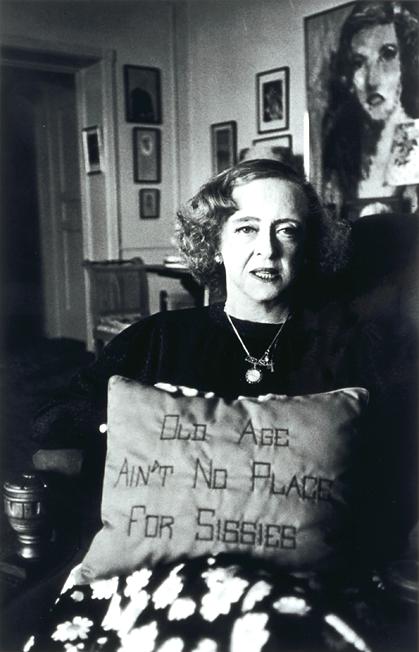
Davis had an incredible career, full of famous moments, iconic performances, and fights with the studio system. She co-founded the Hollywood Canteen, a popular club and service organization for the soldiers of WWII. She was the first female president of the Academy of Motion Picture Arts and Sciences (whose most public work is in giving out the "Oscars" - which she named, by the way, when she noted that the statuette's backside reminded her of her husband's). She would win the award twice, and be nominated 10 times. Over the years, she changed the way Hollywood worked, went from ingenue to respected box office actress, fell out of favor when movie styles changed, and reemerged in now classic low budget horrors like "What Ever Happened to Baby Jane". She probably had more well known quotable lines that any other performer in the business. And she has provided me with a great deal of entertainment pleasure.


From the opening scene (really!) of "The Letter".
Actress Bette Davis signs autographs at a Vermont War Bond rally.

"What a dump!" from "Beyond the Forest".


A theatre poster featuring her character in "All About Eve".

"Fasten your seatbelts, it's going to be a bumpy night."

"Why am I so good at playing bitches? I think it's because I'm not a bitch. Maybe that's why Miss Crawford always plays ladies."

"The best time I ever had with Joan Crawford was when I pushed her down the stairs in Whatever Happened to Baby Jane?"


"Today everyone is a star - they're all billed as 'starring' or 'also starring'. In my day, we earned that recognition."

"With the newspaper strike on, I wouldn't consider dying."


 Thank You, and Happy Birthday, Ms. Davis. (And Thank You, Betty Black!)