About a half an hour after I finished the last post, I finally remembered the film I'd watched (and deleted form the DVR) which I wanted to note someday before I forget it completely. It was Tim Burton's "Big Fish". I like Burton's movies, even the less than successful ones. It's the kind of movie in which no one gets any appendages cut off in clinical detail while fighting invading intergalactic warriors. There aren't even any transforming intergalactic warriors. There is a transformation of sorts, but it's part of a story about a man who is a teller of tall tales, and his relationship with his son. Released in 2003, it probably couldn't get made today, even for an internet only streaming content provider. All in all, a lovely little film I hope to see again someday.
As usual, I'm running late on some things and rushing through others. One item in the "late" category is the posting of my radio show from April the 2nd. The show opened with a few songs to greet the new month, then turned to a meditation of sorts on the idea of a pop song "April in Paris".
By the way, I've noticed that some of my shows posted here through SoundCloud no longer display the player/picture for that episode. Just click on the square and go to my account on SoundCloud - I have shows archived there going back to November 29th, 2014.
There's lots of other stuff and nonsense on which I'd like to catch up, but have little time to do so. Which means that I'm going to post last night's show and go do other things.
I would like to make a mental note that today is the anniversary of my turning on the new transmitter which put WVEW-lp back on the air almost a year after the fire at the Brooks House. This event was on April the 10th, 2012. I had also turned on the old transmitter when the station made its broadcast debut on September 1st, 2006. I turned the transmitter on for radio free brattleboro a couple of times, too. It's probably quite wrong to be proud of such things, but I am for many reasons I'm not going to enumerate just now.
Okay, now - last night's show played a few for lyricist E. Y. "Yip" Harburg, whose birthday was April the 8th. And I played a few for Capitol Records, which was founded around this time in 1942. Accounts differ, and I've seen April the 9th (1942) listed as the day the company was founded, the day it changed its name from Liberty Records to Capitol (about a week after the founding), and the day on which its first record was cut. And finally, there was a set for pianist/band leader Martin Denny who practically founded the "Exotica" movement of the late 1950's and early 60's which resulted in a proliferation of Tiki bars and lounges. The image for the sound file for the show is of a woman listening to a crystal radio made out of a coconut shell. It seemed appropriate at the time.
As always, I hope any listeners enjoy the show(s).
p.s. Well, what do you know, all of the shows form this year are now displaying their players properly. I'd written an old address I had for Soundcloud's tech support (all such info having vanished from their site), but never heard from them. I'm just glad it's working again. It's not like friends or family are currently waiting with baited breath for each and every post, but I'd like things to be available for anyone who stumbles upon these pages.
Sunday, April 10, 2016


Thursday, March 31, 2016
Harness My Zebras
"Harness my zebras - gift of the Nubian King."
So sayeth Mary of Magdala, who was a bit miffed that her fave hunk was off gallivanting around the countryside with some carpenter.
Oh, the shame.
Which means that the big old fashioned Hollywood epics have been showing again somewhere in the recesses of memory, as well as on the tv, and on my wall. That video projector I gave myself for Christmas has reignited my on again off again affair with one of my first loves, the Hollywood movie; as well as the offshoot subgenre, the Hollywood Movie Spectacular (usually with special effects for things like giant apes, cataclysms, flying carpets, various and sundry miracles, etc.).
A little over a week ago, my attempt to gain useable space in my DVR resulted in watching the 1924 silent version of 'The Thief of Bagdad'. I have the 1940 version waiting as well, he bragged with a happy feeling that found visible expression in a sly smile of delight. It's been years since I've seen either. The silent version is a sort of major Hollywood studio super colossal big budget auteur epic. Produced by its star, Douglas Fairbanks, the director's credit is given to Raoul Walsh but it was Fairbank's project all the way. (He wrote the script under a pseudonym.) The releasing studio was United Artists, which had been formed a few years earlier to give greater artistic control of its product (and, needless to say, financial participation) to its principals; Douglas Fairbanks, Mary Pickford (Mrs. Fairbanks at the time), Charlie Chaplin, and D.W. Griffith.
The sets, among the largest ever built, were constructed for Fairbanks' 1922 production of 'Robin Hood', and said to be 10 stories in height. They were redesigned into an art nouveau Bagdad by William Cameron Menzies. The walls of old Bagdad were later re-used for the gate to King Kong's part of Skull Island. The set was ultimately burned to ashes as a stand in for Atlanta in 'Gone With the Wind'. Those scenes of that particular epic, by the way, were directed by William Camron Menzies. It is said that among the old sets burned for 'GWTW' were parts of a set used in the silent 'King of Kings'. I have not yet figured out if the silent movie Jerusalem was another redressed variation of Nottingham/Bagdad revisited or just how the 'King of Kings' (via DeMille and Paramount studios) got into that conflagration. When I was in my teens, I read that the Kong gates were originally from the Babylon set of the 1916 epic 'Intolerance'. I've since read that the Intolerance sets, which were left standing after filming ended (i.e. the money ran out) were taken down in 1919. I guess Hollywood history is a lot like Hollywood versions of history. A major shopping center, which includes an 'event' theatre (where tv shows like the Academy Awards are staged) now sits on the site that was once ancient Babylon (at Hollywood Boulevard and Highland Avenues in Los Angeles), while Nottingham castle/Bagdad (and maybe Jerusalem) were at Santa Monica Blvd. and North Formosa Avenue, several blocks to the southwest.
So sayeth Mary of Magdala, who was a bit miffed that her fave hunk was off gallivanting around the countryside with some carpenter.
Oh, the shame.
Which means that the big old fashioned Hollywood epics have been showing again somewhere in the recesses of memory, as well as on the tv, and on my wall. That video projector I gave myself for Christmas has reignited my on again off again affair with one of my first loves, the Hollywood movie; as well as the offshoot subgenre, the Hollywood Movie Spectacular (usually with special effects for things like giant apes, cataclysms, flying carpets, various and sundry miracles, etc.).
A little over a week ago, my attempt to gain useable space in my DVR resulted in watching the 1924 silent version of 'The Thief of Bagdad'. I have the 1940 version waiting as well, he bragged with a happy feeling that found visible expression in a sly smile of delight. It's been years since I've seen either. The silent version is a sort of major Hollywood studio super colossal big budget auteur epic. Produced by its star, Douglas Fairbanks, the director's credit is given to Raoul Walsh but it was Fairbank's project all the way. (He wrote the script under a pseudonym.) The releasing studio was United Artists, which had been formed a few years earlier to give greater artistic control of its product (and, needless to say, financial participation) to its principals; Douglas Fairbanks, Mary Pickford (Mrs. Fairbanks at the time), Charlie Chaplin, and D.W. Griffith.
 |
| How big is that set? See along the bottom area of the picture? Those little forms are actors. |
 |
| Nottingham Castle on the Pickford-Fairbanks lot. |
 |
| Two years after the set was built for Robin Hood, it became Bagdad.
As a by the by kind of thing, Pickford and Fairbanks had purchased the former Jesse Hampton studio for their productions. It later became the United Artists lot. In the sound era, Joseph Schenck and Samuel Goldwyn filmed there, adding offices and sound stages for productions like 'Wuthering Heights'. The dual ownership status became a problem after the land and studio buildings were left to various inheritors. The courts, in settling the various claims and lawsuits, forced a sale. For a time it was owned by Warner Bros. An independent rental facility known as "The Lot" now occupies part of old Bagdad. Other parts of the former Pickford-Fairbanks studio are now used for an apartment house, a water processing plant, and various retail stores. Among the productions which filmed there are "The Best Years of Our Lives", "The Bishop's Wife", the Roy Rogers tv show, "Guys and Dolls", "Some Like It Hot", 'The Apartment",. "West Side Story", "Apocalypse Now", and in some odd turn of fate, "Robin Hood - Men in Tights".
The Fairbanks 'Thief' is a heck of a lot of fun, but it is definitely best seen on as big a screen as possible. Camera positions constantly shift from intimate close-ups of the principals to shots intended to show the enormity of the sets; human figures are so dwarfed in some shots that one might assume the humans were miniatures. They weren't - the sets were that big. It doesn't help that the aspect ratio is assumed to be 1.33:1 (which is what is listed on the Internet Movie Database). At the time, a 1:1 ratio was common. Printing the film (or showing it) using 1:33:1 thus cuts off a small portion of the frame. Usually, it is the top of the frame that goes missing in such situations. With the Fairbanks Thief, however, the height is kept for effect, while the bottom of the picture frame is impacted. For example - in the shot below the thief, while trying to become worthy of the hand of a Princess, is tempted by sirens in a scene of only a few seconds duration, part of a larger underwater sequence.

The set for this scene took months to build - the art nouveau seaweed and jellyfish were made of cut glass.
Sadly, the bottom of the picture is cut off - I assume due to the wrong aspect ratio being used.
The art nouveau design definitely creates a texture and feel that is different from all other film versions of the tales. It's old Bagdad in context of a slightly fevered Maxfield Parrish dream. I have read that Fairbanks initially wanted to hire Parrish to do the design work. Here's one of William Cameron Menzies sketches, part of a set he produced in a weekend's time to persuade Fairbanks to hire him.

Fairbanks was around 40 when production work began, and while he still looked pretty good, and wore costumes that accented his (ahem) assets, he was getting a little long in the tooth for such roles. Still, he had a field day jumping and dancing around enemies and situations with the abandon of his younger self. Most of the time it's a most enjoyable and naturalistic performance, marred only on a couple of occasions by old silent film pantomime techniques such as scratching the palm or grasping at the air to denote the thief's desire to obtain something for his own. It's not that such actions spoil any of the proceedings, it's more that such things are so startling in otherwise fluid storytelling that they become minor distractions.

The storyline rambles all over the place in a most delightful fashion as our hero undergoes transformation and various quests. (Well what did you expect? What good are heroes without quests?) Along the way are rival suitors, a hiss-able villain (an evil Mongol prince), descents into brutality (the whipping of a man over a minor bit of thievery, and a later whipping of the titular thief), dragons and other monsters (my favorite being a giant underwater spider), valleys of fire, a crystal ball, flying horses, flying carpets, armies from grains of sand - so much in fact that viewers have a tendency to offer audible gasps of astonishment, and mutter "What now?" or "You gotta be kidin' me" in sympathy with our hero as he approaches his next challenge.

The whipping of a small time thief

Taking on an attacking underwater spider (from an untinted print)

The Mongol villain (boo- hiss) (the following inter-title gives an idea of his evil ways)
   When originally shown in the big city theatres, Fairbanks had the various movie palaces scented with perfumes, with extra atmospherics provided by performers who chanted the call to prayer, costumed to enhance an Oriental mood.  It was also fun to watch both the silent 'The King of Kings' (1927), and the sound 'King of Kings' (1961) later in the same week. I'd quite forgotten the physical brutality of the first part of the Nicholas Ray version. This time around, I kept noticing that playing Jesus Christ got a little iffy for the actors involved, as both productions are short on character development. Just the same, the silent version (as noted at the link above) opens with the zebra drawn chariot, and ends with the resurrection as the world explodes into two strip technicolor as though we have all landed in Oz. I saw the 1961 version in 70mm Super Technorama back when. (Super Technorama was an anamorphic widescreen process using film exposed to run through the projector in a vertical manner rather than horizontal - similar to Todd-AO. The idea was to provide widescreen without using lenses which could adversely affect the image. So of course they added anamorphic lenses to it.) When I first saw it, I thought it dwelled too much on the politics of the time, and wanted it to get on to miracles and stuff. Nowadays the political parts seem to go by rather quickly (Barabbas is a revolutionary plotting the overthrow of the Roman state in Judea). (There was, by the way, another movie released in 1961 with Anthony Quinn as "Barabbas". My memory of it is not clear, but clear enough that I no desire to refresh my memory of it.) Plus, the 1961 version has that glorious Miklós Rózsa score - one feels sanctified just by listening to it.
Last night I finally caught up with the Bing Crosby "Pennies From Heaven". I've got company coming, so I'll have to make reference notes later - along with notes on several other movies I've watched recently, either for the umpteenth time, or for the first, i.e. "Boyhood", "The Third Man", "Mark of the Vampire", the 1929 "Bulldog Drummond", "Dracula A.D. 1972" (and "Dracula, Prince of Darkness"), the 1933 "Alice in Wonderland", and a few others I am embarrassed to admit I can't think of at the moment. Hopefully, I'll remember what I wanted to note.
|
Sunday, March 27, 2016
Easter Sunday
I've probably mentioned this before, but I miss the local tradition of a downtown Easter Sunday zombie walk. I think the last time I saw it was on Easter Sunday 2012. That was on April the 8th, and the main reason I remember is that I spent the morning and a good part of the afternoon assisting our engineer with setting up and wiring the new WVEW-lp studio. You know, it would explain a lot about these last few years if I were to assume that the zombies got me.
---------------------------------------
Curses! Sidetracked again!
On to other tasks. I shall have to miss today's chance to be brilliantly witty, charming, and possessed of... well, maybe just leave it as possessed.
And now (drumroll please) last night radio show. (Applause, cheers) (moves hands up and down, "Thank You, Thank You, that's enough now, thank you".)
As you may have guessed, it's a themed show chock full of secular Easter time stuff from ye olde days of radio, and commercially released sound recordings made on black shellac.
As always, I hope any listeners enjoy the show.
Sunday, March 20, 2016
Onion rings for breakfast
Do you know what happens when you get too busy for the daily chores of life? You get onion rings for breakfast. My schedule got messed up again thanks to stuff at the radio station (all volunteer, including humble self) and I never got to the supermarket for groceries. As I don't have a car these days, I have to rely on the bus. I missed my planned excursion on Friday morning, with the result that while I have plenty of leftovers for dinner, I'm out of cereal, eggs, and well, just about everything. I could make rice and veggie dishes for dinner for a couple more days without a shopping trip, but I've been trying to be better about actually eating breakfast. Balance and all that. Last night I wasn't all that hungry after doing my radio show, so this morning I was primed for some nice scrambled eggs with veggies, French toast, cereal - something. But the cupboard for the necessary ingredients is bare. (Studio apartments don't have much in the way of cupboards.) All that's in the freezer is some turkey stock, and the onion rings. They made a good brunch.
 Logging in to the blog made me realize that I never posted last week's radio show, which was the 16th anniversary edition. The show has gone through a few evolutions, but lately I haven't been able to spend the time to do the shows the way I want to do them. Between running the station, and being President of the station's non-profit, there is just too much to keep me busy. ("If only I were paid rather than a volunteer", he thought to himself for the 1,474th time.) Over the last few years the show has concentrated on the mid 1940's. This has been mostly due to the number of music oriented shows from that period which have become available. Those episodes, when the entire broadcast was spent in a certain week or two with various excerpts from radio shows of the weeks involved - including the news - are the shows of which I'm proudest. But I've been feeling like I'm stuck in a rut. There's no time to listen to the radio shows of the period, no time to make new clips from the shows, I've just been re-using the clips I made in the year and a half I wasn't running the station. I was thinking of calling it a day last August with the show that marked the 70th anniversary of the end of WWII. At the time I didn't think that I'd accomplished what I had wanted with that show, so I figured I would just keep at it for awhile. Since then, I've had an increase in the odd verbal mistakes I've been making ('senior moments'), and an increase in the feeling that I'm not putting together the quality of shows that I want to accomplish. And I feel like I'm done with the WWII story for awhile. Over the last few weeks, I gave a lot of thought to calling it a day. Just before the anniversary show, I decided that while I'm done with the WWII shows for awhile, I'm not done with the show itself. That decision had a lot to do with my thoughts about Delores deleting her blog. I wrote to her, by the way - she's fine. She didn't say why she deleted it, and I didn't ask. At any rate, here's the 16th Anniversary edition of Recycled Radio:
Another thing that got away from me this week - I'd intended to start writing a bit about the movies I've been seeing. When I first started collecting 16mm movies, I began a practice of noting the movies I showed - mostly as a way of tracking bulb life. When I worked in film distribution, I took home a lot of movies from the company's non-theatrical library. Now I wish I had made notes about the films as well. I remember my assistant asking me to show him Mario Bava's 'Four Flies on Gray Velvet', but I'll be darned if I remember much about it 40 years later. I actually went out to the movies at a movie theatre last week to see - oh, great - I can't remember the name. It's a Marvel anti-superhero superhero movie. Ah, "Deadpool". (Bless the ability to instantly look things up on the internet.) It was in its last week at the local theatre, a late era smaller town movie palace, built in 1938. I've posted about the Latchis before. For its last week the movie went back to the main auditorium which is mostly intact and still has an old fashioned big screen. (The only change of consequence to the main auditorium was turning the "crying room" into a separate screen.)
 I've not really seen much of the wave of superhero movies of the last decade. While the special effects made possible by computers have opened up a whole new world of possibilities, I can't say that using them for ever bigger explosions and more intense battle scenes has any kind of innate appeal for me. Plus, I was never a Marvel kind of guy. My era was DC comics with the likes of Superman, Batman, Wonder Woman, the Justice League of America, et. al. Over the years I've known a number of people who have toiled in the comics industry - when I used to manage that big bookstore in NYC in the 1970's, the guys from Marvel were regular customers. At that same store, I gave several autograph parties for various illustrators. So I've been aware of many of the problems of the artists, especially the shameful way Jack Kirby's heirs were treated, and etc. So a part of my boycott of superhero movies was due to my feelings about Marvel specifically. At any rate, 'Deadpool' makes fun of its own genre without really making it to the levels of camp. It's a movie for the teenage boy still hiding inside of adults no matter what chromosome set they have. It's got the best opening and end title sequences in recent memory, and is highly entertaining. But even though it was very enjoyable, it was kind of like popcorn without butter on it - something was missing, it was satisfying in an empty calories sort of way. Now I have no problem with sheer silly entertainment for entertainment's sake, after all, one of my favorite movies is "Cobra Woman" with Maria Monetz as twin sisters. The problem I have with this kind of big budget film making may come down to the budget itself. When one is spending over a hundred million dollars to make one two hour movie, problems with protecting the investment arise. The necessity of having every single thing planned out leads to a certain lifelessness. This kind of filmmaking used to be the B picture, inventiveness due to budget constraints was required; there was a kind of 'make it up as you go along' giddiness to many of them. Now, it's a very studied affair, a linked group of set pieces told in broad strokes and broadswords. Even the cheeky vulgarity seemed too planned. When I see things like this, I keep wondering what if Kurosawa had been able to use this technology while making 'Dreams', or if Orson Welles or Dali had been able to use it.... etc.
I keep thinking that I must have seen a movie at home this week, but I can't recall having watched one. I did watch a few pieces of movies on the Blue-Ray player a friend lent me to test the format. And one day was spent at the Smith College annual bulb show. Tuesday night a friend without tv came over to watch the primary election returns, and to bitch about the current state of politics.
 Spring arrived at 12:30am this morning. We've had a temperature drop, and at one point snow was predicted. No matter, it's Spring. My radio show had its annual 'Swing Into Spring', on last night's program, which also played a few for Stephen Sondheim's birthday on March 22nd. 'Senior moments' intruded when I noted Ted Lewis as Al Lewis; and totally forgot to credit a lovely piano solo on "Meditation" to Marian MacPartland, whose birthday is today, March 20th. These kinds of mistakes have been increasing in frequency. My memory doesn't work as well as it once did - or as quickly. This morning I read that statins, which I take for high levels of bad cholesterol, can cause this kind of thing as a side effect. I once went on a specialized diet for many months without any change to the cholesterol reading. My doctor smiled as she said, "this is genetics laughing in your face". When compared to the size of my father, his brothers, and my brothers from both my father and my mother's later family, I may be taller than my Dad and his brothers, but otherwise as far as bulk is concerned, I'm the runt of the litter. Also possibly contributing to these little lapses in memory are the antidepressants I used to take. Ditto the anti-anxietals I used to take. Luckily I got off of those years ago. Next time I see my doctor, I hope I remember to discuss the statin. At any rate, here's the annual "Swing Into Spring". As always, I hope any listeners enjoy the show.
.
 Logging in to the blog made me realize that I never posted last week's radio show, which was the 16th anniversary edition. The show has gone through a few evolutions, but lately I haven't been able to spend the time to do the shows the way I want to do them. Between running the station, and being President of the station's non-profit, there is just too much to keep me busy. ("If only I were paid rather than a volunteer", he thought to himself for the 1,474th time.) Over the last few years the show has concentrated on the mid 1940's. This has been mostly due to the number of music oriented shows from that period which have become available. Those episodes, when the entire broadcast was spent in a certain week or two with various excerpts from radio shows of the weeks involved - including the news - are the shows of which I'm proudest. But I've been feeling like I'm stuck in a rut. There's no time to listen to the radio shows of the period, no time to make new clips from the shows, I've just been re-using the clips I made in the year and a half I wasn't running the station. I was thinking of calling it a day last August with the show that marked the 70th anniversary of the end of WWII. At the time I didn't think that I'd accomplished what I had wanted with that show, so I figured I would just keep at it for awhile. Since then, I've had an increase in the odd verbal mistakes I've been making ('senior moments'), and an increase in the feeling that I'm not putting together the quality of shows that I want to accomplish. And I feel like I'm done with the WWII story for awhile. Over the last few weeks, I gave a lot of thought to calling it a day. Just before the anniversary show, I decided that while I'm done with the WWII shows for awhile, I'm not done with the show itself. That decision had a lot to do with my thoughts about Delores deleting her blog. I wrote to her, by the way - she's fine. She didn't say why she deleted it, and I didn't ask. At any rate, here's the 16th Anniversary edition of Recycled Radio:
Another thing that got away from me this week - I'd intended to start writing a bit about the movies I've been seeing. When I first started collecting 16mm movies, I began a practice of noting the movies I showed - mostly as a way of tracking bulb life. When I worked in film distribution, I took home a lot of movies from the company's non-theatrical library. Now I wish I had made notes about the films as well. I remember my assistant asking me to show him Mario Bava's 'Four Flies on Gray Velvet', but I'll be darned if I remember much about it 40 years later. I actually went out to the movies at a movie theatre last week to see - oh, great - I can't remember the name. It's a Marvel anti-superhero superhero movie. Ah, "Deadpool". (Bless the ability to instantly look things up on the internet.) It was in its last week at the local theatre, a late era smaller town movie palace, built in 1938. I've posted about the Latchis before. For its last week the movie went back to the main auditorium which is mostly intact and still has an old fashioned big screen. (The only change of consequence to the main auditorium was turning the "crying room" into a separate screen.)
 I've not really seen much of the wave of superhero movies of the last decade. While the special effects made possible by computers have opened up a whole new world of possibilities, I can't say that using them for ever bigger explosions and more intense battle scenes has any kind of innate appeal for me. Plus, I was never a Marvel kind of guy. My era was DC comics with the likes of Superman, Batman, Wonder Woman, the Justice League of America, et. al. Over the years I've known a number of people who have toiled in the comics industry - when I used to manage that big bookstore in NYC in the 1970's, the guys from Marvel were regular customers. At that same store, I gave several autograph parties for various illustrators. So I've been aware of many of the problems of the artists, especially the shameful way Jack Kirby's heirs were treated, and etc. So a part of my boycott of superhero movies was due to my feelings about Marvel specifically. At any rate, 'Deadpool' makes fun of its own genre without really making it to the levels of camp. It's a movie for the teenage boy still hiding inside of adults no matter what chromosome set they have. It's got the best opening and end title sequences in recent memory, and is highly entertaining. But even though it was very enjoyable, it was kind of like popcorn without butter on it - something was missing, it was satisfying in an empty calories sort of way. Now I have no problem with sheer silly entertainment for entertainment's sake, after all, one of my favorite movies is "Cobra Woman" with Maria Monetz as twin sisters. The problem I have with this kind of big budget film making may come down to the budget itself. When one is spending over a hundred million dollars to make one two hour movie, problems with protecting the investment arise. The necessity of having every single thing planned out leads to a certain lifelessness. This kind of filmmaking used to be the B picture, inventiveness due to budget constraints was required; there was a kind of 'make it up as you go along' giddiness to many of them. Now, it's a very studied affair, a linked group of set pieces told in broad strokes and broadswords. Even the cheeky vulgarity seemed too planned. When I see things like this, I keep wondering what if Kurosawa had been able to use this technology while making 'Dreams', or if Orson Welles or Dali had been able to use it.... etc.
 I keep thinking that I must have seen a movie at home this week, but I can't recall having watched one. I did watch a few pieces of movies on the Blue-Ray player a friend lent me to test the format. And one day was spent at the Smith College annual bulb show. Tuesday night a friend without tv came over to watch the primary election returns, and to bitch about the current state of politics.
 Spring arrived at 12:30am this morning. We've had a temperature drop, and at one point snow was predicted. No matter, it's Spring. My radio show had its annual 'Swing Into Spring', on last night's program, which also played a few for Stephen Sondheim's birthday on March 22nd. 'Senior moments' intruded when I noted Ted Lewis as Al Lewis; and totally forgot to credit a lovely piano solo on "Meditation" to Marian MacPartland, whose birthday is today, March 20th. These kinds of mistakes have been increasing in frequency. My memory doesn't work as well as it once did - or as quickly. This morning I read that statins, which I take for high levels of bad cholesterol, can cause this kind of thing as a side effect. I once went on a specialized diet for many months without any change to the cholesterol reading. My doctor smiled as she said, "this is genetics laughing in your face". When compared to the size of my father, his brothers, and my brothers from both my father and my mother's later family, I may be taller than my Dad and his brothers, but otherwise as far as bulk is concerned, I'm the runt of the litter. Also possibly contributing to these little lapses in memory are the antidepressants I used to take. Ditto the anti-anxietals I used to take. Luckily I got off of those years ago. Next time I see my doctor, I hope I remember to discuss the statin. At any rate, here's the annual "Swing Into Spring". As always, I hope any listeners enjoy the show.
.
Wednesday, March 9, 2016
A little extra and the Bishop's wife
I pay a little extra to the cable company to have a cable box with DVR, digital video recording.
I could write more than a few posts deriving from that one sentence. The cable company's rate structure and business model makes me think of modern day pirates. The quality of digital recording is excellent, and it records in high definition if one has that service - I pay a little extra for that, too. Why I should have to pony up more money for high def in a world in which high def became the broadcast standard some years ago has not been explained. Did I use the word 'pirates' yet? There is a problem, of course. (Isn't there always?) The box fills up with recordings, at which point programs and movies have to be deleted to make way for new items of interest.
I record a lot of movies, mostly from the classic movie channel. You know, the one that I was fortunate to get when it was part of a special deal? Otherwise, I'd have had to pay a lot extra for an entire service level of sports channels which I would never watch in order to get the one non-sports channel in that package, i.e. the classic movies channel. Did I use the word 'pirates' yet?

 Last night, I finally caught up with "The Bishop's Wife". For some reason or other, I'd never seen it. It's another of those movies with a somewhat messy history. Produced by Samuel Goldwyn using facilities at MGM, it was distributed by RKO, and somehow ended up looking like it might have been filmed at Paramount. The story told of a somewhat fastidious Bishop who had become so focused on the task of raising money for a cathedral that he was ignoring his wife and daughter, as well as the needs of parishioners. Heavenly intervention arrives in the form of a rather rakish angel. Goldwyn became so dissatisfied with the dailies he called a halt to production, replaced the director, had changes made to the sets as well as the script, and changed one important bit of the casting. The role of the Bishop was played by Cary Grant, the Angel was played by David Niven. During the hiatus, the director and Goldwyn decided that the roles should be reversed. Grant was allegedly not very happy with this turn of events. The story has changed over the years, however, so that now it is said that the change in roles was Grant's idea and it was Niven who was unhappy. (Niven was at a low point during the filming. His wife was injured in a fall and died from ensuing complications leaving him with two young sons to raise.) However the change happened, both men gave excellent performances in their new roles. Loretta Young does a decent job as the Bishop's wife, suffering neglect with admirable restraint, but was not quite as inspired in her performance as her co-stars.

One of the stories from the set told of a day the director had trouble with both Mr. Grant and Ms. Young. They each insisted that for one particular scene, they be photographed from their "good side". The only problem was that they both favored the same side. The director filmed the scene with the two stars standing side by side looking out a window. Mr. Goldwyn was not happy. The next day he confronted the director and the stars on the set. After having the situation explained to him, he is said to have remarked that if he was only going to get a shot with a half of the stars faces, then they would only get half of their salaries. There were no further such demands.
The rest of the cast was rounded out with instantly recognizable character actors. Well, instantly recognizable for anyone of my age, or for inveterate moviegoers. I especially liked Monty Woolley in the role of a history professor, and Gladys Cooper as the rich widow funding the cathedral. Elsa Lancaster had been cast in a maid's role, but had to withdraw due to other commitments. During the production delay, she finished up her other role and ended up replacing her replacement who had to exit due to commitments of her own. Two of the young players in the previous year's holiday picture, "It's a Wonderful Like" are in the cast - the fellow who played the young George Bailey, and the young lady who played ZuZu of the petals.
Although the film got glowing reviews, it didn't do a lot of business at the box office. Under the theory that the title made people think it was a religious story, the advertising was changed (and in some markets the name of the picture as well) to read "Cary and the Bishop's Wife!" In those markets, the box-office increased 25%.
It's easy to see why it became a Holiday classic back in the days when movies were regularly shown on broadcast tv. A charming sort of romantic comedy, there's Christmas shopping, snow scenes, and a tad of religion. In once scene, Cary Grant plays a harp in the home of the rich widow. The melody became popular, acquired a set of lyrics, and became a minor hit for Nat King Cole as "Lost April".
Most of the movies currently on my DVR are old favorites which I haven't seen in many years. I'm running out of movies I've recorded that I haven't seen. Soon I'll be watching a number of old favorites which I haven't seen in a long, long time. I'm still surprised I spent the money for the projector (it cost about the same as my 16mm print of Casablanca, purchased in 1975 or so). All the little extras I've spent which used to make me feel slightly guilty over the expense incurred have made this possible; it has turned out to be more rewarding than I ever imagined.

I could write more than a few posts deriving from that one sentence. The cable company's rate structure and business model makes me think of modern day pirates. The quality of digital recording is excellent, and it records in high definition if one has that service - I pay a little extra for that, too. Why I should have to pony up more money for high def in a world in which high def became the broadcast standard some years ago has not been explained. Did I use the word 'pirates' yet? There is a problem, of course. (Isn't there always?) The box fills up with recordings, at which point programs and movies have to be deleted to make way for new items of interest.
I record a lot of movies, mostly from the classic movie channel. You know, the one that I was fortunate to get when it was part of a special deal? Otherwise, I'd have had to pay a lot extra for an entire service level of sports channels which I would never watch in order to get the one non-sports channel in that package, i.e. the classic movies channel. Did I use the word 'pirates' yet?

Well, anyway, since I gave myself that relatively inexpensive video projector for Christmas, I've been watching a couple of movies just about every week. The way I currently have things set up, the old Hollywood style projected picture is about 5 feet wide, and a little under 4 feet in height. Widescreen, well at least the tv version of it, is over 6 feet in length. In my small-ish space, I could reorient things and get a much larger picture, but my current method allows for a guest or two without totally rearranging the furniture.
 Last night, I finally caught up with "The Bishop's Wife". For some reason or other, I'd never seen it. It's another of those movies with a somewhat messy history. Produced by Samuel Goldwyn using facilities at MGM, it was distributed by RKO, and somehow ended up looking like it might have been filmed at Paramount. The story told of a somewhat fastidious Bishop who had become so focused on the task of raising money for a cathedral that he was ignoring his wife and daughter, as well as the needs of parishioners. Heavenly intervention arrives in the form of a rather rakish angel. Goldwyn became so dissatisfied with the dailies he called a halt to production, replaced the director, had changes made to the sets as well as the script, and changed one important bit of the casting. The role of the Bishop was played by Cary Grant, the Angel was played by David Niven. During the hiatus, the director and Goldwyn decided that the roles should be reversed. Grant was allegedly not very happy with this turn of events. The story has changed over the years, however, so that now it is said that the change in roles was Grant's idea and it was Niven who was unhappy. (Niven was at a low point during the filming. His wife was injured in a fall and died from ensuing complications leaving him with two young sons to raise.) However the change happened, both men gave excellent performances in their new roles. Loretta Young does a decent job as the Bishop's wife, suffering neglect with admirable restraint, but was not quite as inspired in her performance as her co-stars.
One of the stories from the set told of a day the director had trouble with both Mr. Grant and Ms. Young. They each insisted that for one particular scene, they be photographed from their "good side". The only problem was that they both favored the same side. The director filmed the scene with the two stars standing side by side looking out a window. Mr. Goldwyn was not happy. The next day he confronted the director and the stars on the set. After having the situation explained to him, he is said to have remarked that if he was only going to get a shot with a half of the stars faces, then they would only get half of their salaries. There were no further such demands.
The rest of the cast was rounded out with instantly recognizable character actors. Well, instantly recognizable for anyone of my age, or for inveterate moviegoers. I especially liked Monty Woolley in the role of a history professor, and Gladys Cooper as the rich widow funding the cathedral. Elsa Lancaster had been cast in a maid's role, but had to withdraw due to other commitments. During the production delay, she finished up her other role and ended up replacing her replacement who had to exit due to commitments of her own. Two of the young players in the previous year's holiday picture, "It's a Wonderful Like" are in the cast - the fellow who played the young George Bailey, and the young lady who played ZuZu of the petals.
Although the film got glowing reviews, it didn't do a lot of business at the box office. Under the theory that the title made people think it was a religious story, the advertising was changed (and in some markets the name of the picture as well) to read "Cary and the Bishop's Wife!" In those markets, the box-office increased 25%.
It's easy to see why it became a Holiday classic back in the days when movies were regularly shown on broadcast tv. A charming sort of romantic comedy, there's Christmas shopping, snow scenes, and a tad of religion. In once scene, Cary Grant plays a harp in the home of the rich widow. The melody became popular, acquired a set of lyrics, and became a minor hit for Nat King Cole as "Lost April".
Most of the movies currently on my DVR are old favorites which I haven't seen in many years. I'm running out of movies I've recorded that I haven't seen. Soon I'll be watching a number of old favorites which I haven't seen in a long, long time. I'm still surprised I spent the money for the projector (it cost about the same as my 16mm print of Casablanca, purchased in 1975 or so). All the little extras I've spent which used to make me feel slightly guilty over the expense incurred have made this possible; it has turned out to be more rewarding than I ever imagined.

Tuesday, March 8, 2016
Such impermanence.
Okay, here's the thing.
I'm really tired of torturing the language to find ways not to start a post with "I". Such an opening seems far too egotistical. In the long run, however, this blog is about - well, me. My attitudes, my thoughts, my activities, my diatribes against the slings and arrows, my fears (if I want to go that far), and so on and so forth. That's a lot more 'me' than I sometimes find comfortable expressing, or for that matter, reading. In the long run, I suppose this is kind of like scribbling on a fence or a bathroom wall somewhere. I don't really kid myself that I'm all that interesting, or that my thoughts are all that different and are therefore deserving of notice. My writing style isn't especially interesting either. Sometimes I kid myself that distant friends, internet friends, far off family, can occasionally check in and see what is happening in the life and times. Maybe a nephew or niece will one day decide to find out whatever happened to that crazy uncle who, rumor has it, all but ran away to join the circus. It would be nice if they found these ramblings and read just enough to catch the memories, dreams, ideals, and contradictions that make up the old psyche.
I verbally ramble. I am not comfortable with the quick spittle expressions of not quite face to facebook, or tweeting twitterers. My thoughts and words meander. I often feel helplessly old fashioned in this regard. I've no burning desire to be as verbose as Charles Dickens who, after all, was paid by the word. Then again, reading Dickens is a joy in my universe. (I'd have said "in my book" but the books in question were his.) (Ba-da-dumb.)
This morning, I wondered (not for the first time) why I hadn't seen any posts from Delores' blog in about a month. I subscribed to her 'Under the Porch Light', so her posts arrived by email. She had trouble some time back with her electronic interface device, and I had assumed that she was either taking a break, or that such trouble had returned. She was often the only person to leave notes on this page of the electronic universe. I steered my browser to her blog. It is gone, vanished into the sub electronic ether, the online evidence of her being has been removed. There may be any number of very good reasons for this turn of events. Perhaps there was too much information which was used by someone stealing her identity. A hundred quick explanations form in the thought process.
The blogs, facebook accounts, and etc. of people I know or hardly know or would like to know have vanished before. I find it unsettling. These twistings of the ones and zeroes are part of the evidence that we were here, they are expressions of our humanity, a record of our species, the modern equivalent of graffiti etched onto the walls of ancient Egypt. It is unsettling to realize how quickly it all can vanish.
------------------------------------------------------
Today, March 8th, is International Women's Day. I think I've noted it in previous posts. For the last couple of years, I've done my annual radio show about the "all girl" big bands on the weekend closest to this date. This year, I had other plans, as it's the 16th anniversary of my program; I've been giving serious thought to calling it a day and closing down the show. I've thought about doing it a couple of times over the last year or so. The anniversary seems like an appropriate time. Last Saturday's show was going to be a kind of tale in the telling, a history of how the show developed and why I think it might be time to stop. This coming Saturday would be the actual anniversary, the slam bang fabulous finish. Now, my show is on for two hours starting at 6pm on Saturday nights. It's a time when people are making or eating dinner, getting ready to go out, deciding what to watch that night, etc. I've always thought it more of a music show and less talk about the music or the whys and wherefores. So deciding to proceed in such fashion was an exception to the way I've conducted my program. Of course, the guy on at 2 o'clock that afternoon suddenly decided to do a show in which he autobiographically told the story of how he found the music that became important to him, and what meaning it had in his growing into allegedly responsible adulthood. It was a great show. I couldn't follow that act. I'd intended to play a song or two for International Women's Day, but with the last minute change in plans ended up playing about an hour's worth. The remaining hour was more or less just doodling around, not unlike the way the show started out. I still haven't made the decision about the future of the show, I've wavered back and forth. I guess in a way it's my scratchings on the wall.
As always, I hope any listeners enjoy the show.
I'm really tired of torturing the language to find ways not to start a post with "I". Such an opening seems far too egotistical. In the long run, however, this blog is about - well, me. My attitudes, my thoughts, my activities, my diatribes against the slings and arrows, my fears (if I want to go that far), and so on and so forth. That's a lot more 'me' than I sometimes find comfortable expressing, or for that matter, reading. In the long run, I suppose this is kind of like scribbling on a fence or a bathroom wall somewhere. I don't really kid myself that I'm all that interesting, or that my thoughts are all that different and are therefore deserving of notice. My writing style isn't especially interesting either. Sometimes I kid myself that distant friends, internet friends, far off family, can occasionally check in and see what is happening in the life and times. Maybe a nephew or niece will one day decide to find out whatever happened to that crazy uncle who, rumor has it, all but ran away to join the circus. It would be nice if they found these ramblings and read just enough to catch the memories, dreams, ideals, and contradictions that make up the old psyche.
I verbally ramble. I am not comfortable with the quick spittle expressions of not quite face to facebook, or tweeting twitterers. My thoughts and words meander. I often feel helplessly old fashioned in this regard. I've no burning desire to be as verbose as Charles Dickens who, after all, was paid by the word. Then again, reading Dickens is a joy in my universe. (I'd have said "in my book" but the books in question were his.) (Ba-da-dumb.)
This morning, I wondered (not for the first time) why I hadn't seen any posts from Delores' blog in about a month. I subscribed to her 'Under the Porch Light', so her posts arrived by email. She had trouble some time back with her electronic interface device, and I had assumed that she was either taking a break, or that such trouble had returned. She was often the only person to leave notes on this page of the electronic universe. I steered my browser to her blog. It is gone, vanished into the sub electronic ether, the online evidence of her being has been removed. There may be any number of very good reasons for this turn of events. Perhaps there was too much information which was used by someone stealing her identity. A hundred quick explanations form in the thought process.
The blogs, facebook accounts, and etc. of people I know or hardly know or would like to know have vanished before. I find it unsettling. These twistings of the ones and zeroes are part of the evidence that we were here, they are expressions of our humanity, a record of our species, the modern equivalent of graffiti etched onto the walls of ancient Egypt. It is unsettling to realize how quickly it all can vanish.
------------------------------------------------------
Today, March 8th, is International Women's Day. I think I've noted it in previous posts. For the last couple of years, I've done my annual radio show about the "all girl" big bands on the weekend closest to this date. This year, I had other plans, as it's the 16th anniversary of my program; I've been giving serious thought to calling it a day and closing down the show. I've thought about doing it a couple of times over the last year or so. The anniversary seems like an appropriate time. Last Saturday's show was going to be a kind of tale in the telling, a history of how the show developed and why I think it might be time to stop. This coming Saturday would be the actual anniversary, the slam bang fabulous finish. Now, my show is on for two hours starting at 6pm on Saturday nights. It's a time when people are making or eating dinner, getting ready to go out, deciding what to watch that night, etc. I've always thought it more of a music show and less talk about the music or the whys and wherefores. So deciding to proceed in such fashion was an exception to the way I've conducted my program. Of course, the guy on at 2 o'clock that afternoon suddenly decided to do a show in which he autobiographically told the story of how he found the music that became important to him, and what meaning it had in his growing into allegedly responsible adulthood. It was a great show. I couldn't follow that act. I'd intended to play a song or two for International Women's Day, but with the last minute change in plans ended up playing about an hour's worth. The remaining hour was more or less just doodling around, not unlike the way the show started out. I still haven't made the decision about the future of the show, I've wavered back and forth. I guess in a way it's my scratchings on the wall.
As always, I hope any listeners enjoy the show.
Monday, March 7, 2016
Paying for the Fiddler
This morning, as I was perusing the New York Times online, I stumbled upon a mention of the current Broadway revival of the musical "Fiddler on the Roof". The mention was in the headline of an article about the lifestyle of one of the show's performers. As I checked to see if I was interested in the article, I noticed a link to the show's review, from which I surmised that the revival started its run a few months ago. That review contained a link to the original production's review from 1964, which I also read.
I must mention that I subscribe to the New York Times online. Personally, I still I prefer the old fashioned experience of holding a newspaper, folding and turning the pages (and the sound that made), and getting my fingers smudged with rubbed off ink. I liked seeing the ads for products in which I had no interest; graphic concoctions of art and commerce that helped pay the paper's operating expenses. I liked seeing articles that piqued my curiosity, I liked reading opinions that differed from my own. I do not wish to be party to the slow and painful death of newspapers and objective reporting, but the fact of the matter is that the Times is unaffordable for me to purchase on a daily basis. My online fee, acquired during a special promotion, runs $15.00 a month and includes the paper's historical files. I would not be able to afford one month of the paper's Sunday edition for that price. These promotional deals are often set for a number of months, and bear constant watching, as the monthly fee is deducted automatically from my bank account. When the deal expires, one will find one's account charged at a much higher rate without warning. A month isn't really a month - the date on which my subscription fee is deducted from my bank account is a moving target, forever edging forward. At the beginning of this past autumn, the deduction was made during the third week of the month. It is now made within the first few days of the month. This maneuver, of course, is not unique to the Times. My cable/phone/internet bill does the same thing. As that one is a much larger amount, I can't let it be set to automatically deduct lest I be caught short. But the date for that bill still changes, a month is not a month, and the 'due by' date seems to move forward as well. But I digress.
When I lived in New York City, or within a hour or two of it, I greatly enjoyed going to shows. Reading the original review of 'Fiddler', I started to wonder how much it cost back in 1964 when it debuted. As the review was in a .pdf scan of the paper, I went to the next page to check the theatre listings for the price. In 1964, an orchestra seat for that brand new musical cost $9.40 on a Friday or Saturday night when prices were highest.
As cost is relative, I looked up the minimum wage in 1964. The Federally set minimum in those days was $1.25 an hour. Which means, that forgetting taxes, deductions, and etc. someone earning the minimum wage would have to work for 8 hours to afford one ticket.
The top price for an orchestra seat for the current revival, which is far less than the price of a new show, is $167.00 for a Friday or Saturday night. Someone working at the Federal minimum wage of $7.25 an hour would have to work over 23 hours to afford one ticket.
My curiosity got the better of me, and I looked to see how much an average orchestra seat for the current hot ticket, the hip-hop infused musical 'Hamilton' would cost. Finding ticket prices is somewhat difficult if one isn't ordering, and for 'Hamilton', tickets are hard to get. I found someone who complained in a letter written last June that the mid-orchestra seats they had just acquired for that November cost $327.00 each. I decided to check the show's website, which claimed that a few seats were indeed available. The cost for next Friday night was well over $1,000.00. I think it was close to $1,200 something, but my eyes and mind boggled. I had to look away.

 |
| from the 1964 review |
When I lived in New York City, or within a hour or two of it, I greatly enjoyed going to shows. Reading the original review of 'Fiddler', I started to wonder how much it cost back in 1964 when it debuted. As the review was in a .pdf scan of the paper, I went to the next page to check the theatre listings for the price. In 1964, an orchestra seat for that brand new musical cost $9.40 on a Friday or Saturday night when prices were highest.
As cost is relative, I looked up the minimum wage in 1964. The Federally set minimum in those days was $1.25 an hour. Which means, that forgetting taxes, deductions, and etc. someone earning the minimum wage would have to work for 8 hours to afford one ticket.
The top price for an orchestra seat for the current revival, which is far less than the price of a new show, is $167.00 for a Friday or Saturday night. Someone working at the Federal minimum wage of $7.25 an hour would have to work over 23 hours to afford one ticket.
 |
| The Broadway Theatre, one of the few theatres whose entrance is actually on Broadway. It was built as a movie palace with a stage. Mickey Mouse made his debut here before it switched to live shows. It returned to movies for the premiere of Disney's 'Fantasia', and once again for the premiere of Cinerama. When I was seeing shows there, the exterior looked quite different. (The first show I saw there was 'Cabaret', back in 1968.) The current façade and marquee are from work done when the neighboring skyscraper was built a few years ago. |
My curiosity got the better of me, and I looked to see how much an average orchestra seat for the current hot ticket, the hip-hop infused musical 'Hamilton' would cost. Finding ticket prices is somewhat difficult if one isn't ordering, and for 'Hamilton', tickets are hard to get. I found someone who complained in a letter written last June that the mid-orchestra seats they had just acquired for that November cost $327.00 each. I decided to check the show's website, which claimed that a few seats were indeed available. The cost for next Friday night was well over $1,000.00. I think it was close to $1,200 something, but my eyes and mind boggled. I had to look away.

Friday, March 4, 2016
Another dance on the edge
Last night, after another very long week (well, actually two very long weeks), I finally started work on the first part of a program to celebrate the 16th anniversary of my radio show. It was my intention to only work for an hour and then watch the Republican's performance piece. I got lost in my task and missed the debate. I just saw the first 15 minutes of it on the internet. I had great difficulty with the Fox News website (Fox News hosted the event), having to restart the debate webstream 3 times, watching a different commercial each time. I finally got the first section to play without crashing. Then it suddenly ended, and according to the website, the stream moved on to section 2 of the debate. The only problem was that it was section one repeated. These problems occurred at 7 something o'clock in the morning, on a major corporation's website, i.e. not a heavy traffic time. If ever there was a metaphor hanging the air like a bunch of over ripe grapes....
In the few minutes I got to see, candidate Marco Rubio played the role of attack dog. The general demeanor of the proceedings degraded so quickly that within the first five minutes the leading candidate was defending the size of his genitals. I suppose it was something of a victory that he didn't use crude language. The audience hooted and hollered with delight, similar to what one might hear from a group of children egging on the participants in a school yard brawl. Perhaps it didn't help matters that a couple of nights ago I watched a 1942 movie called "Hitler's Children". It was a wonderfully melodramatic and lurid account of life under the growing influence and strength of the Nazi regime. It opens with a schoolyard fight between freedom loving American children and heavily indoctrinated Fuehrer loving German children. It was based on a once famous book, "Education for Death", which was also the source material for a Disney short of the same name.
Here's a clip from the movie's opening (all that is available on the internet - there is a trailer on the Turner Classic Movies website, but its embed code doesn't work) just ignore the subtitles, please... (and yes, that's young Bonita Granville, who played Nancy Drew, wielding the baseball bat).
The Disney version (if you get the bothersome 'world's best' flag on the lower left hand corner, it can be clicked off. Oh, by the way, if you're going to watch this, I suggest using the full screen function.)
I had to remind myself that the alleged debate was a forum of candidates seeking to be the leader of the most powerful nation on the face of the Earth. Of course, it probably doesn't matter anymore - our Presidency is beginning to resemble a ceremonial leadership position not unlike the monarchs of Great Britain. The real authority and power lies elsewhere. Pun intended. Considering the consequences of electing any of the candidates in last night's entertainment (and the moneymen behind the curtain), I have begun to consider that Armageddon might not be that bad of an idea after all.
Last week's radio show escape didn't focus on a particular month and year. It was one of the jukebox style shows I've been doing lately, and took note of a number of birthdays. Thus, there are performances from singer Mildred Bailey (2/27), bandleader Jimmy Dorsey (2/29), singer Dinah Shore (2/29), bandleader Glenn Miller (3/1), and composer Kurt Weil (3/2). Sadly, I only fit in one piece (at the opening) for Desi Arnaz (3/2). And there was one song with a lyric by Dr. Suess (3/2). My 'senior moments' continued - a reference I made to a Lucha Libre mask came out as something on the order of 'leecha lubra'.
As the anniversary program is at hand, I'm wondering if it's time to give up the show. Perhaps it's time for a nice blowout and graceful exit while I can still manage it. I'm fairly certain that this rumination has more to do with other problems at the station, and the time I spend trying to keep everything there moving forward. Each week it seems I have less and less time for my own show, and a much harder time focusing on it. My work on it lately has left me feeling disappointed in myself. I'm not enjoying it any longer. I realized some time ago that I was having a wonderful time when I wasn't the Board President, and wasn't managing the station. My work has rebuilt our show schedule and bank account to about the same place things were when I stopped for not quite a year and a half. It took not quite a year and a half to accomplish that feat. Well, enough of my whining. Here's last week's show.
As always, I hope any listeners enjoy my truly meager efforts.
In the few minutes I got to see, candidate Marco Rubio played the role of attack dog. The general demeanor of the proceedings degraded so quickly that within the first five minutes the leading candidate was defending the size of his genitals. I suppose it was something of a victory that he didn't use crude language. The audience hooted and hollered with delight, similar to what one might hear from a group of children egging on the participants in a school yard brawl. Perhaps it didn't help matters that a couple of nights ago I watched a 1942 movie called "Hitler's Children". It was a wonderfully melodramatic and lurid account of life under the growing influence and strength of the Nazi regime. It opens with a schoolyard fight between freedom loving American children and heavily indoctrinated Fuehrer loving German children. It was based on a once famous book, "Education for Death", which was also the source material for a Disney short of the same name.
Here's a clip from the movie's opening (all that is available on the internet - there is a trailer on the Turner Classic Movies website, but its embed code doesn't work) just ignore the subtitles, please... (and yes, that's young Bonita Granville, who played Nancy Drew, wielding the baseball bat).
The Disney version (if you get the bothersome 'world's best' flag on the lower left hand corner, it can be clicked off. Oh, by the way, if you're going to watch this, I suggest using the full screen function.)
I had to remind myself that the alleged debate was a forum of candidates seeking to be the leader of the most powerful nation on the face of the Earth. Of course, it probably doesn't matter anymore - our Presidency is beginning to resemble a ceremonial leadership position not unlike the monarchs of Great Britain. The real authority and power lies elsewhere. Pun intended. Considering the consequences of electing any of the candidates in last night's entertainment (and the moneymen behind the curtain), I have begun to consider that Armageddon might not be that bad of an idea after all.
Last week's radio show escape didn't focus on a particular month and year. It was one of the jukebox style shows I've been doing lately, and took note of a number of birthdays. Thus, there are performances from singer Mildred Bailey (2/27), bandleader Jimmy Dorsey (2/29), singer Dinah Shore (2/29), bandleader Glenn Miller (3/1), and composer Kurt Weil (3/2). Sadly, I only fit in one piece (at the opening) for Desi Arnaz (3/2). And there was one song with a lyric by Dr. Suess (3/2). My 'senior moments' continued - a reference I made to a Lucha Libre mask came out as something on the order of 'leecha lubra'.
As the anniversary program is at hand, I'm wondering if it's time to give up the show. Perhaps it's time for a nice blowout and graceful exit while I can still manage it. I'm fairly certain that this rumination has more to do with other problems at the station, and the time I spend trying to keep everything there moving forward. Each week it seems I have less and less time for my own show, and a much harder time focusing on it. My work on it lately has left me feeling disappointed in myself. I'm not enjoying it any longer. I realized some time ago that I was having a wonderful time when I wasn't the Board President, and wasn't managing the station. My work has rebuilt our show schedule and bank account to about the same place things were when I stopped for not quite a year and a half. It took not quite a year and a half to accomplish that feat. Well, enough of my whining. Here's last week's show.
As always, I hope any listeners enjoy my truly meager efforts.
Tuesday, February 23, 2016
Brotherhood Week
In 1927, the four time Governor of the state of New York, Al Smith, ran for President. A Progressive Democrat, Smith was anti-prohibition, improved worker's rights, women's rights, worked to improve the lot of children in the workforce, was anti-lynching, and so on and so forth. He was also the first Catholic to run for the office. His opponents stirred up fears in the Southern States that he would follow the bidding of the Pope, not the American People. He was, as was pointed out at the time, defeated by ""the three P's: Prohibition, Prejudice, and Prosperity". Republican Herbert Hoover won the election; the Prosperity part would vanish with the Wall Street crash, Prohibition would be ended about four years later. You can guess what remained.

Religious leaders at the time were concerned by these events and formed the National Conference of Christians and Jews to discuss ways to improve the situation. In 1934, they hit upon the idea of Brotherhood Week. Franklin D. Roosevelt, who had become President the year before, liked the idea; Brotherhood Week was declared as the third week of every February. It was still around when I was in grade school in the 1950's, and class discussions centered on people living and working together. The week began to fade somewhat in the social foment of the 1960's. It seems to have died out in the early 1980's after Ronald Regan became President.

This year, during what had been Brotherhood Week, the lead candidate seeking the Republican Party nomination for President repeated an historical fiction about a Muslim insurgency being stopped by killing the insurgents (except one to tell the story) using bullets dipped in pigs blood, and burying their bodies with the carcasses of pigs. (The pigs being an unclean animal which would result in the deceased's inability to enter Heaven.) The implication was that the United States should be doing such things today. The same candidate just yesterday stated that we wanted to punch a protestor in the face. (He previously suggested another protestor be "roughed up".) Oh, yeah, he also had a dustup with the Pope.

This week's radio show listened in to February 1946, and some of the music in the airwaves, on the juke boxes, and for sale on popular 78rpm records, that would have been heard during that year's Brotherhood Week. The War was over, our men and women were returning home. Along this week's journey, were excerpts from radio shows with the Incomparable Hildegarde, Cowboy Slim Reinhart, and for the finale an entire broadcast of "Songs By Sinatra" originally heard on February 20th, 1946. Listening to the show, I discovered that I had a 'senior moment' at the very end when I credited the woman singing "Be-Baba-Leba" as Helen Hayes instead of Helen Humes. I also seem to have failed to mention the date of the 'Songs By Sinatra' broadcast - which had occurred exactly 70 years before on that very evening. As always, I hope any listeners enjoy the show.

Religious leaders at the time were concerned by these events and formed the National Conference of Christians and Jews to discuss ways to improve the situation. In 1934, they hit upon the idea of Brotherhood Week. Franklin D. Roosevelt, who had become President the year before, liked the idea; Brotherhood Week was declared as the third week of every February. It was still around when I was in grade school in the 1950's, and class discussions centered on people living and working together. The week began to fade somewhat in the social foment of the 1960's. It seems to have died out in the early 1980's after Ronald Regan became President.

This year, during what had been Brotherhood Week, the lead candidate seeking the Republican Party nomination for President repeated an historical fiction about a Muslim insurgency being stopped by killing the insurgents (except one to tell the story) using bullets dipped in pigs blood, and burying their bodies with the carcasses of pigs. (The pigs being an unclean animal which would result in the deceased's inability to enter Heaven.) The implication was that the United States should be doing such things today. The same candidate just yesterday stated that we wanted to punch a protestor in the face. (He previously suggested another protestor be "roughed up".) Oh, yeah, he also had a dustup with the Pope.

This week's radio show listened in to February 1946, and some of the music in the airwaves, on the juke boxes, and for sale on popular 78rpm records, that would have been heard during that year's Brotherhood Week. The War was over, our men and women were returning home. Along this week's journey, were excerpts from radio shows with the Incomparable Hildegarde, Cowboy Slim Reinhart, and for the finale an entire broadcast of "Songs By Sinatra" originally heard on February 20th, 1946. Listening to the show, I discovered that I had a 'senior moment' at the very end when I credited the woman singing "Be-Baba-Leba" as Helen Hayes instead of Helen Humes. I also seem to have failed to mention the date of the 'Songs By Sinatra' broadcast - which had occurred exactly 70 years before on that very evening. As always, I hope any listeners enjoy the show.
Wednesday, February 17, 2016
I (heart symbol) DVR
If ever there was any doubt that sometimes progress, in the form of technological innovation, can be good, one should look no further than the annoying and overpriced cable box that most of us have these days.
Once upon a time, tv signals were acquired for free via over the air broadcast. Well, nothing is ever really free, I suppose. Except the squandering of my charms, and even that had a cost - but that story is not the subject of this post. If there was a cost beyond the purchase of a television, it was the purchase of some form of antenna. Many people, living near the point of broadcast origin, could make due with nothing, or with rabbit ears. If you lived a little bit away from the source of the broadcasts, there might be a further cost with the purchase of an outdoor antenna, and once the evening network schedules began converting to color the follow up purchase of an antenna rotator to get a clear ghost free image.
When cable came along, it was cheap, needed no set top box decoder, and carried only broadcast tv - because that's all there was. Broadcast then included the recently arrived UHF channels, which showed old movies and old tv shows. I still treasure the year I lived in my first 'on my own' apartment in Ocean City, NJ, where the cable brought Star Trek (then newly syndicated for re-runs) from a Philadelphia station at 6pm and from a New York City station at 7pm (a bit preferable, as the series from New York was shown in original broadcast order).
Eventually, HBO started up as a pay channel devoted to recent movies, shown uncut. Set top cable box decoders entered the scene. Other 'cable only' channels joined the fray. I suppose this plethora of entertainment could not have happened if the remote control hadn't come along about the same time as the antenna rotator. I was quite impressed by the first remote control we had, which was acquired with my Dad's purchase of our first color tv. Before that, I was the remote control. I didn't mind being told to jump up and change the channel - we didn't know anything different. (And I didn't mind being the remote in visits to my Grandmother or my Uncles. I supposed it was part of the deal of getting fed and being the kid.) Plus there was an extra added benefit of a bit of exercise.
When home video recording began, I dove in. I loved recording programs (mostly old movies) that I would otherwise miss, and watching them later. I loved being able to fast forward through the commercials. And I really liked the idea of archiving the movies and programs I liked - at the time the Betamax and VHS cassettes weren't all that expensive.
Fast forward to today. Cable now brings ever changing numbers of hundreds of 'stations', can provide what some advertising executive must laughingly refer to as 'high speed internet', Wi-Fi broadcasting that can't be turned off (although a passcode would be require to use it), and a 'land line' telephone line for those of us who prefer to be somewhat old-fashioned with that form of communication. (Today's everything to everybody media device telephones, and their cost, is worth a post of its own.) Add in high definition and Digital Video Recording, and one's monthly bill for cable can easily reach a level which could inspire expense guilt in rich people (if they were to ever think about it).
 The cable companies have, for many years now, given new shades of meaning to the concept of perfidy. They have created a world in which the cost of service isn't the cost of service. There is a rental fee for the set top box, a fee for high definition channels, a fee for this, a fee for that, various taxes, and service levels that boggle the imagination. I was lucky to get the classic movie channel as part of a promotional package - normally, I'd have to get all of the available sports channels to get the one channel in said group that is different (i.e. the classic movie channel). Hmmm, I'd best stop before the subject of this missive changes completely.
I should also note that a couple of years ago when I made peace with Comcast and got their service back, I was given their brand new cable box dvr - one of the first of that model given out. Within a year there was a replacement available that would do more - a lot more. Record up to 6 programs at once, and store many, many, many, many more movies and programs - among other improvements. I have yet to get it - I have too many movies and programs stored on my cable box that I haven't had a chance to watch. Oh, the problems of the modern world, eh?
The thing I enjoy the most these days is the DVR. At first I used it just to record programs I wanted to see but which weren't on at my preferred viewing times. Then came the discovery that the rewind function works for 'real time' tv. Let's say that yet another director let yet another actor mumble important lines of speech so badly that they could not be heard. (This problem is sometimes exacerbated by digital sound recording which can't seem to reproduce music and dialogue without it being either too quiet or too loud. Goldilocks would have never found 'just right', if you get my drift.) With DVR, one can simply hit rewind, raise the volume, and watch that part again. With DVR I can start recording a program like the Grammy awards, start watching the recording an hour or so into the program, fast forward through parts I have no desire to see, commercials, and so on and so forth, eventually catching up with the program's actual live broadcast before it is over. With DVR, 'Dancing With the Stars' can be reduced to a half hour's running time. And should a call of nature intrude while watching a broadcast, with DVR one can press the pause button, go outside and take care of business, and return to pick up where the interruption occurred.

The DVR also records in high definition (when you pay extra for the high definition in the first place) which includes the tv version of wide screen. Now there's a topic - wide screen tv uses a picture ratio of height to width that is not used by any movie company anywhere, ever. But these days we do away with much of what is possible and exist in the land of someone's definition of "good enough".
Now, I've been enjoying the possibilities of DVR for awhile. But last Saturday, my use of it turned into a triumph. The 4,727th Republican Party's Presidential-Candidate Debate started at 8pm, just as my radio show ended. I used the DVR to record it - in widescreen, color, high def, stereophonic sound, and watched it later. If the candidates had worn different costumes, it might have been mistaken for a World Wresting Federation brawl. The trick when watching is to realize that it is entertainment. Taking any of it seriously would result in a trip to the passport office just in case.

Speaking of my radio show (you must have known I'd get around to it) the first half of last Saturday's show took note of several birthdays, including a few of my favorite performers, like Jimmy Durante. The second half celebrated one of the composers of the Great American Song Book, Harold Arlen.
Arlen never promoted himself the way most of his contemporaries did. As a result, his contributions have been somewhat overlooked. It's odd, really - he composed some of the best pieces in the American Songbook, yet he rarely used the standard song form. He's often thought of as a composer of show music 'blues', yet he only composed a couple of songs in that form. If I'm still doing the show this time next year, I'll have to devote the entire 2 hours to him - there just isn't enough time to play most of his songs that should be played in such a program. Hopefully, I won't have another of my 'senior moments' - this time around I gave the wrong lyricist credit on one of my favorite Arlen songs, "Last Night When We Were Young". The wordsmith was Yip Harburg. As always, I hope any listeners enjoy the show.
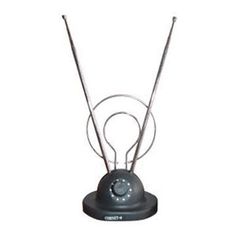 |
| 'Rabbit ears' antenna for set top use. |
 |
| Outdoor antenna with motor. |
 |
| The Rotator control, which usually sat by the 'easy chair'. |
 |
| One of the great inventions of all time, the remote control. |
 |
| Yes, I had a Betamax. Just like this. Later models had better quality and stereo sound. I got one of those, too. And I still have it - but it needs a minor repair. |
 The cable companies have, for many years now, given new shades of meaning to the concept of perfidy. They have created a world in which the cost of service isn't the cost of service. There is a rental fee for the set top box, a fee for high definition channels, a fee for this, a fee for that, various taxes, and service levels that boggle the imagination. I was lucky to get the classic movie channel as part of a promotional package - normally, I'd have to get all of the available sports channels to get the one channel in said group that is different (i.e. the classic movie channel). Hmmm, I'd best stop before the subject of this missive changes completely.
 |
| After years of ignoring requests to have my bill delivered electronically, (known as 'going paperless'), I finally gave in and signed up. It was truly wonderful not to have to deal with all that paper, make decisions about how long to keep the bill after it was paid, etc. The only problem? It took the cable company 9 months to stop sending a paper bill. |
The thing I enjoy the most these days is the DVR. At first I used it just to record programs I wanted to see but which weren't on at my preferred viewing times. Then came the discovery that the rewind function works for 'real time' tv. Let's say that yet another director let yet another actor mumble important lines of speech so badly that they could not be heard. (This problem is sometimes exacerbated by digital sound recording which can't seem to reproduce music and dialogue without it being either too quiet or too loud. Goldilocks would have never found 'just right', if you get my drift.) With DVR, one can simply hit rewind, raise the volume, and watch that part again. With DVR I can start recording a program like the Grammy awards, start watching the recording an hour or so into the program, fast forward through parts I have no desire to see, commercials, and so on and so forth, eventually catching up with the program's actual live broadcast before it is over. With DVR, 'Dancing With the Stars' can be reduced to a half hour's running time. And should a call of nature intrude while watching a broadcast, with DVR one can press the pause button, go outside and take care of business, and return to pick up where the interruption occurred.

The DVR also records in high definition (when you pay extra for the high definition in the first place) which includes the tv version of wide screen. Now there's a topic - wide screen tv uses a picture ratio of height to width that is not used by any movie company anywhere, ever. But these days we do away with much of what is possible and exist in the land of someone's definition of "good enough".
Now, I've been enjoying the possibilities of DVR for awhile. But last Saturday, my use of it turned into a triumph. The 4,727th Republican Party's Presidential-Candidate Debate started at 8pm, just as my radio show ended. I used the DVR to record it - in widescreen, color, high def, stereophonic sound, and watched it later. If the candidates had worn different costumes, it might have been mistaken for a World Wresting Federation brawl. The trick when watching is to realize that it is entertainment. Taking any of it seriously would result in a trip to the passport office just in case.

Speaking of my radio show (you must have known I'd get around to it) the first half of last Saturday's show took note of several birthdays, including a few of my favorite performers, like Jimmy Durante. The second half celebrated one of the composers of the Great American Song Book, Harold Arlen.
 |
| A young Harold Arlen, about the time he was composing revues for the Cotton Club, and songs like, 'Stormy Weather', 'Get Happy', and 'Let's Fall in Love". |
Tuesday, February 9, 2016
Fat Tuesday
Today is Fat Tuesday. When I was a kid (raised Methodist) we used to call it Shrove Tuesday. In Great Britain, it is a day to consume pancakes. We used to consume donuts. I rather liked having a reason to consume donuts. The word "shrove" is derived from "shrive", which refers to a confession of sins, a sort of summing up if you will, for the purpose of repentance and seeking the help of the Almighty to obtain Absolution for your sins. In the case of Shrove Tuesday, one seeks absolution starting the next day (Ash Wednesday). On Fat Tuesday, one parties, joins the greater Mardi Gras Carnivale, gorges on fattening foods, and marvels at the convenience and poetry of the human situation.
With Carnivale crossing my mind, I thought I'd wander over to You Tube and see if any clips were available from "Orfeu Negro", a.k.a. "Black Orpheus". It's the ancient story of Orpheus and Eurydice, set in Rio during Carnivale. The bossa nova score is by Luiz Bonfá and Antônio Carlos Jobim. The film's attitudes towards the poor blacks of Rio are no longer acceptable to many, and I doubt that the film gets many showings now. Perhaps that is why, instead of film clips, the entire movie is available on YouTube - for Free! One used to spend years trying to see a movie like this, waiting for a screening at a revival house in the big city, or going to a museum, or an arts group showing a worn 16mm print. Now it is available at a click. (And, when there is commercial potential left, a fee.) It is unfortunate that today's films buffs will rarely get a chance to see movies like this on a big screen. But still.... Black Orpheus, for free.
Today is Presidential Primary Day in New Hampshire, the first actual vote by the great unwashed masses for this season. New Hampshire is a mostly white state that bears little resemblance to most of the country. Unlike, say, the just held Iowa caucus, in a mostly white state that bears little resemblance to the rest of the country. After today there will hopefully be a respite from the incessant commercials for those campaigning for the nomination. I live in a state which borders New Hampshire. We've been inundated with these advertisements for months. Both political parties, their supporters, their shady secret Political Action Committees, their candidates, the media, and the general populace will have plenty to repent tomorrow. Sadly, this Carnival simply picks up and moves elsewhere for a bit, before moving on again.
It's been a pretty shameful show this time around. Of course, endless campaigning means endless ad revenue to the media, which is now presenting the contest to select the leader of the country as something akin to the reality game shows which pervade broadcast and cable television. It's a constant onslaught of "who insulted whom, who's winning" reporting, presented in the style of a Facebookland Twitterverse of the nasty and belligerent scripted and rehearsed quote. The media companies are supposed to be impartial in their reporting, but that school closed a long time ago. It isn't difficult to figure out which candidates the corporate conglomerates are backing if one pays attention. One must remember, however, that to the media, this is still show business. Here's the Governor of one state, acting very much like the schoolyard bully he is by most accounts. Here's the Governor of another state, scion of a political family with two Presidents already in the till, who is doing so badly in the polls he has called in his 90 year old mother to shill for votes as she pushes forward with her walker - in the snow. I could go on and address some of the real issues, but that proves ultimately (and extremely) disheartening. Reality seems to have little to do with it anymore.
--------------------------------------------------------------------------
Most of my radio show this past Saturday (February 6th) was spent visiting the airwaves and jukeboxes of late January to early February 1945. Frank Lowry, known for his whistling abilities, showed up a couple of times. The finale was a February 6th, 1945 broadcast with Vaughn Monroe and His Orchestra. As always, I hope any listeners enjoy the show.
With Carnivale crossing my mind, I thought I'd wander over to You Tube and see if any clips were available from "Orfeu Negro", a.k.a. "Black Orpheus". It's the ancient story of Orpheus and Eurydice, set in Rio during Carnivale. The bossa nova score is by Luiz Bonfá and Antônio Carlos Jobim. The film's attitudes towards the poor blacks of Rio are no longer acceptable to many, and I doubt that the film gets many showings now. Perhaps that is why, instead of film clips, the entire movie is available on YouTube - for Free! One used to spend years trying to see a movie like this, waiting for a screening at a revival house in the big city, or going to a museum, or an arts group showing a worn 16mm print. Now it is available at a click. (And, when there is commercial potential left, a fee.) It is unfortunate that today's films buffs will rarely get a chance to see movies like this on a big screen. But still.... Black Orpheus, for free.
Today is Presidential Primary Day in New Hampshire, the first actual vote by the great unwashed masses for this season. New Hampshire is a mostly white state that bears little resemblance to most of the country. Unlike, say, the just held Iowa caucus, in a mostly white state that bears little resemblance to the rest of the country. After today there will hopefully be a respite from the incessant commercials for those campaigning for the nomination. I live in a state which borders New Hampshire. We've been inundated with these advertisements for months. Both political parties, their supporters, their shady secret Political Action Committees, their candidates, the media, and the general populace will have plenty to repent tomorrow. Sadly, this Carnival simply picks up and moves elsewhere for a bit, before moving on again.
It's been a pretty shameful show this time around. Of course, endless campaigning means endless ad revenue to the media, which is now presenting the contest to select the leader of the country as something akin to the reality game shows which pervade broadcast and cable television. It's a constant onslaught of "who insulted whom, who's winning" reporting, presented in the style of a Facebookland Twitterverse of the nasty and belligerent scripted and rehearsed quote. The media companies are supposed to be impartial in their reporting, but that school closed a long time ago. It isn't difficult to figure out which candidates the corporate conglomerates are backing if one pays attention. One must remember, however, that to the media, this is still show business. Here's the Governor of one state, acting very much like the schoolyard bully he is by most accounts. Here's the Governor of another state, scion of a political family with two Presidents already in the till, who is doing so badly in the polls he has called in his 90 year old mother to shill for votes as she pushes forward with her walker - in the snow. I could go on and address some of the real issues, but that proves ultimately (and extremely) disheartening. Reality seems to have little to do with it anymore.
--------------------------------------------------------------------------
Most of my radio show this past Saturday (February 6th) was spent visiting the airwaves and jukeboxes of late January to early February 1945. Frank Lowry, known for his whistling abilities, showed up a couple of times. The finale was a February 6th, 1945 broadcast with Vaughn Monroe and His Orchestra. As always, I hope any listeners enjoy the show.
Thursday, February 4, 2016
Loads of hot air
At 7:45am this morning, the temperature was already 45 degrees Fahrenheit. While this may not seem remarkable, it is not the normal order of things in Vermont in February. The snow and ice from the only snow which has had accumulation so far this winter is just about gone. In February.
It is political season in the U.S. (when isn't it anymore?). The Republican party, which controls both the U.S. House of Representatives and the U.S. Congress still denies climate change. Although, to be fair, some in that party are now beginning to admit that it is happening - they just don't think that humans have played any part in it. So, there is no need to address pollution, carbon emissions, how we supply our energy needs (meaning don't mess with big oil or nuclear power), or do anything to address the situation. Other than provide more tax cuts and legal protections to the corporations which have played a major role in creating this mess.
In December, an international accord was reached in Paris to lower greenhouse gas emissions. While it is nowhere near what is needed, it is at least a start. It's taken close to what, 40 years, to get this far? (It was in the mid 1970's that scientists gave up on the idea of aerosols as possibly creating global cooling and more or less agreed - and published - that global warming via the 'greenhouse' effect was actually happening. Climate change theories that incorporated a human causal factor go back to the late 1800's.) The Paris accord hasn't been signed yet - that won't happen until April.
The agreement had barely been announced when Republicans in the U.S. government made it clear that they did not support it, and that they would work to prevent the President of the United States from being able to deliver on promises made to other countries in the negotiations (in which our country and our Secretary of State, John Kerry, played a major role). The House Committee on Science, Space, and Technology is against it. That committee is chaired by Lamar Smith, Republican form the state of Texas, who believes that climate change not only doesn't exist, but is based on data that was intentionally manipulated to produce this result for some nefarious purpose. Lamar Smith, by the way, has received well over $600,000.00 from the fossil fuel industry during his years in office. (Although he hasn't stated it explicitly, he has made statements which could easily be interpreted as rejecting the concept of evolution. It plays well to his base. Something like 47% of Republicans in one survey stated outright that they do not believe in the "theory of evolution".) The House Committee chaired by Representative Smith began new hearings on this subject yesterday, February 3rd. The hearings have a title - “The Paris Climate Promise: A Bad Deal for America". The Chair's opening statement included the thought that the deal would help destroy the U.S. economy without producing any appreciable result.
As the primaries for the Democratic and Republican nominations for the office of President of the U.S. are underway, one might wonder about the candidates' respective positions regarding climate change. The two Democratic candidates consider the issue real, and one that needs immediate responses. The top three Republican candidates (as of this writing) all either deny climate change outright, or deny that mankind has had a hand in it.
My radio show last week was about a different U.S. President, as the program took place on January the 30th, the birthday of Franklin D. Roosevelt. When he was 39, Roosevelt contracted infantile paralysis, a disease so old that it is depicted in Egyptian hieroglyphs. It left him crippled. As he searched for a way to deal with it, he discovered the healing effect of the Warm Springs spa in Georgia. He won the Governorship of New York after campaigning in a wheelchair. When Warm Springs fell on hard financial times, he bought it and opened it to anyone who needed it, regardless of ability to pay. By the time he was elected President, it had eaten up 2/3 of his fortune. His first year in office, at the height of the Depression, he held a Birthday Ball whose proceeds would go to his new Warm Springs Foundation. It raised over one million dollars in one night.

In 1934, the Presidential Birthday Ball concept went national. Any community which held one would split the proceeds with the President's foundation. The foundation also began to fund research for a cure for the disease, which was becoming known as 'polio'. One night, during a radio show, entertainer Eddie Cantor asked all of America to contribute, to send any spare change they had, even a dime. He wanted to see a march of dimes from every town to the White House. It wasn't long before the President's foundation became known as the March of Dimes. Roosevelt died in the Spring of 1945, just before the fall of Germany in WWII. That January, the Birthday Balls contributed $18.9 million to the foundation. After his death, the U.S. Congress requested the U.S. Mint honor Roosevelt by putting his profile on the dime.

The research funded by Roosevelt's foundation resulted in Jonas Salk's vaccine, which became available in the mid 1950's. Polio was, for the most part, wiped out. Sadly, it reappeared a couple of years ago in war torn Syria.
This week's radio show also took note of Eddie Cantor's birthday, which is on January 31st. Far too few pieces were played for jazz trumpeter Roy Eldridge, whose birthday was on January 30th. As a finale, there is the January 30th, 1946 broadcast of the Old Gold show, better known as "Songs By Sinatra". The Benny Goodman sextet appeared in the guest slot.
It is political season in the U.S. (when isn't it anymore?). The Republican party, which controls both the U.S. House of Representatives and the U.S. Congress still denies climate change. Although, to be fair, some in that party are now beginning to admit that it is happening - they just don't think that humans have played any part in it. So, there is no need to address pollution, carbon emissions, how we supply our energy needs (meaning don't mess with big oil or nuclear power), or do anything to address the situation. Other than provide more tax cuts and legal protections to the corporations which have played a major role in creating this mess.
 |
| Bernie Sanders is a U.S. Senator from Vermont, the state in which I live. He is running for the Democratic nomination for President. This is the kind of plain, direct statement he usually makes. |
 |
| This is one of the nicer responses to Senator Sanders from the conservative right. So far, the money source funding "Rebooting Liberty" has not become public. |
As the primaries for the Democratic and Republican nominations for the office of President of the U.S. are underway, one might wonder about the candidates' respective positions regarding climate change. The two Democratic candidates consider the issue real, and one that needs immediate responses. The top three Republican candidates (as of this writing) all either deny climate change outright, or deny that mankind has had a hand in it.
 |
| Shirley Temple and Eddie Cantor |
My radio show last week was about a different U.S. President, as the program took place on January the 30th, the birthday of Franklin D. Roosevelt. When he was 39, Roosevelt contracted infantile paralysis, a disease so old that it is depicted in Egyptian hieroglyphs. It left him crippled. As he searched for a way to deal with it, he discovered the healing effect of the Warm Springs spa in Georgia. He won the Governorship of New York after campaigning in a wheelchair. When Warm Springs fell on hard financial times, he bought it and opened it to anyone who needed it, regardless of ability to pay. By the time he was elected President, it had eaten up 2/3 of his fortune. His first year in office, at the height of the Depression, he held a Birthday Ball whose proceeds would go to his new Warm Springs Foundation. It raised over one million dollars in one night.

In 1934, the Presidential Birthday Ball concept went national. Any community which held one would split the proceeds with the President's foundation. The foundation also began to fund research for a cure for the disease, which was becoming known as 'polio'. One night, during a radio show, entertainer Eddie Cantor asked all of America to contribute, to send any spare change they had, even a dime. He wanted to see a march of dimes from every town to the White House. It wasn't long before the President's foundation became known as the March of Dimes. Roosevelt died in the Spring of 1945, just before the fall of Germany in WWII. That January, the Birthday Balls contributed $18.9 million to the foundation. After his death, the U.S. Congress requested the U.S. Mint honor Roosevelt by putting his profile on the dime.

The research funded by Roosevelt's foundation resulted in Jonas Salk's vaccine, which became available in the mid 1950's. Polio was, for the most part, wiped out. Sadly, it reappeared a couple of years ago in war torn Syria.
This week's radio show also took note of Eddie Cantor's birthday, which is on January 31st. Far too few pieces were played for jazz trumpeter Roy Eldridge, whose birthday was on January 30th. As a finale, there is the January 30th, 1946 broadcast of the Old Gold show, better known as "Songs By Sinatra". The Benny Goodman sextet appeared in the guest slot.
As always, I hope any listeners enjoy the show.
Subscribe to:
Posts (Atom)